
Macklemore Willingly Paid the Price for Saying “Free Palestine”
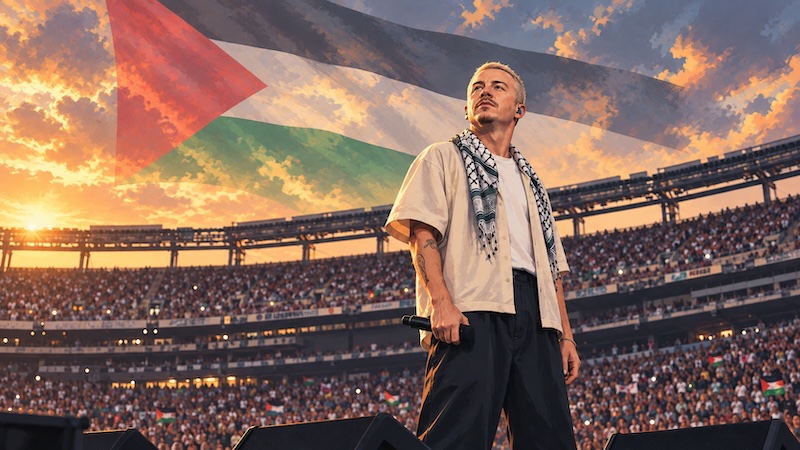
Macklemore knew that speaking about Palestine on one of the largest tours in America could carry a cost. Now that cost has arrived. Messina Touring Group confirmed on September 14 that the Seattle rapper would no longer perform on eight remaining dates of Ed Sheeran’s U.S. Loop Tour. The promoter said venues had warned that concerts with Macklemore on the bill would not be allowed to proceed, which could have caused the wider tour to be canceled.
That explanation leaves major questions unanswered. Messina did not name the venues, publish their notices, identify the people involved, or explain the basis for their objections. Macklemore then offered his own detailed account. He said Sheeran told him that Robert Kraft, whose business holdings include Gillette Stadium, had barred him from that venue and rallied other stadium owners behind an ultimatum. Neither Sheeran nor Kraft had publicly answered that allegation by the September 15 reporting cutoff.
Macklemore used a major commercial stage to oppose the killing, displacement, and deprivation of Palestinians. He was removed from the remaining dates after organized pressure and reported venue objections. He deserves support for accepting that consequence and continuing to speak. His conduct belongs to a political tradition within Hip Hop that treats visibility as a responsibility.
Hip Hop loses something when access, sponsorship, or fear of controversy becomes the main limit on what artists are willing to say.
What Macklemore Said at MetLife
During Sheeran’s September 4 show at MetLife Stadium, Macklemore said that one reason he joined the tour was the chance to tell stadium audiences, “Free Palestine.” He addressed people in Gaza and the occupied West Bank, then performed “Hind’s Hall,” his protest song tied to the Palestine solidarity encampments that spread across university campuses in 2024. News reports said the performance included images from the war.
The response was divided. The Israeli American Council started a petition asking Sheeran to remove him from the remaining dates. StopAntisemitism condemned the set. CBS New York interviewed concertgoers who felt targeted or left during the performance, as well as an attendee who supported Macklemore’s decision to speak.
At the second MetLife show on September 5, Macklemore addressed Jewish members of the audience. He said his criticism of Israel and his support for Palestinian liberation were not attacks on Jewish people. That distinction deserves to be heard. Antisemitism is real and must be opposed. Criticism of a government, a military campaign, or Zionism cannot be treated as automatic proof of hatred toward Jewish people.
Pink initially reposted criticism of Macklemore. She later clarified that the words in the original post were not ones she would have chosen. She said the presentation frightened her and people she loved, while also stating that she was not asking for Macklemore to be silenced, fired, or removed.
The Facts and the Missing Answers
The confirmed account is limited. Macklemore had been booked for eight more support appearances across seven stadiums. Messina said upcoming venues would not accept him on the lineup. Official listings on Sheeran’s website removed his name while continuing to list Lukas Graham and Aaron Rowe.
Macklemore’s account goes further. He wrote that Sheeran and his team made the final decision after difficult private talks. He said Sheeran told him that Kraft had contacted him and coordinated pressure from other stadium owners. Macklemore also attributed comments about “Free Palestine” and the Palestinian flag to Sheeran during those private discussions.
Those claims must stay attached to Macklemore’s name until other participants provide evidence. They should not be repeated as settled facts, and they do not establish Sheeran’s personal beliefs. Sheeran faced a major operational decision involving ticket buyers, employees, contracts, and stadium access. His silence, however, leaves the promoter’s incomplete account in place and fans to form opinions of their own. If venues threatened cancellation, the public deserves to know which venues objected, who spoke for them, and whether the stated concern involved safety, contracts, sponsors, politics, or something else.
Messina framed the removal as necessary to protect the rest of the tour and hundreds of thousands of fans. That argument explains the commercial calculation. It does not settle the ethical question. A touring company can make a rational business choice while helping suppress a political message. Neutral language about stakeholders and operations does not erase who lost access to the stage.
The Human Context Cannot Be Reduced to Tour Business
Macklemore began his statement by rejecting the role of victim. “The victims are the Palestinian people,” he wrote. It’s necessary to keep that in focus because the issue is larger than one rapper’s booking or one pop star’s public response.
The Hamas led attacks of October 7, 2023 killed about 1,200 people in Israel and involved the abduction of 251 hostages, according to a United Nations report. The same report says Israel’s military operation in Gaza caused tens of thousands of civilian deaths, immense destruction, and repeated displacement of most of Gaza’s population. A September 11, 2026 update from the United Nations Office for the Coordination of Humanitarian Affairs described Gaza’s humanitarian conditions as dire, with continuing attacks, casualties, displacement, shortages of medical supplies, and severe limits on water and sanitation.
Acknowledging the crimes of October 7 does not require silence about Palestinian suffering or Israeli state violence. Opposing antisemitism does not require support for every action of Israel’s government. Macklemore’s public argument rests on these distinctions. They are essential to any honest discussion of his removal.
Speaking Out Is Part of Hip Hop’s History
Hip Hop did not begin as a corporate product designed to keep institutions comfortable. It developed in Black and Latino communities in New York amid disinvestment, exclusion, and aggressive policing. Its parties created joy and competition. Its records also documented conditions that dominant media and political leaders often ignored.
Grandmaster Flash and the Furious Five made urban neglect central to “The Message.” Public Enemy confronted racism and state authority. N.W.A. forced police violence into national debate. Queen Latifah addressed respect, gender, and Black dignity. Tupac wrote about poverty, addiction, police abuse, and the women who held families together under pressure. Across decades, artists have used Hip Hop to identify injustice in direct language.
That history does not mean every rapper must share one political position. It does mean political speech is part of the culture’s record. Hip Hop loses something when access, sponsorship, or fear of controversy becomes the main limit on what artists are willing to say.
Macklemore used the access he had to direct attention toward Palestinians, understood that the decision could cost him work, and kept speaking after the consequence became clear. That is responsible use of a large platform.
More Artists Should Accept the Risk
Macklemore ended his statement by saying he needed two shows, not ten, because those two chances let him say “Free Palestine” before tens of thousands of people. Stadium access gave the message a reach that smaller venues and social posts could not match. Once the speech reached that scale, the institutional response changed.
Hip Hop should reject the idea that conscience is acceptable only when it carries no professional cost. Artists will disagree about tactics, language, and policy. They should still be willing to oppose mass civilian suffering, racism, antisemitism, state violence, and dehumanization when those subjects threaten their access.
Macklemore took a stand and lost eight stadium dates. The people who opposed his set, the venues, and tour leaders owe the public a fuller account of how the removal happened. Until that account exists, the confirmed result is plain. After public pressure and reported venue objections, a rapper who spoke for Palestinian freedom was removed from a major U.S. tour and Ed Sheeran buckled.
More people in Hip Hop should follow Macklemore’s example. They should study the facts, speak with care, reject hatred, and use their access against injustice. Hip Hop artists should not let stadium access or appeasement determine whether they confront injustice. That’s real Hip Hop.
Free Palestine.


3 thoughts on “Macklemore Willingly Paid the Price for Saying “Free Palestine””