
The FBI letter sent to N.W.A. in 1989
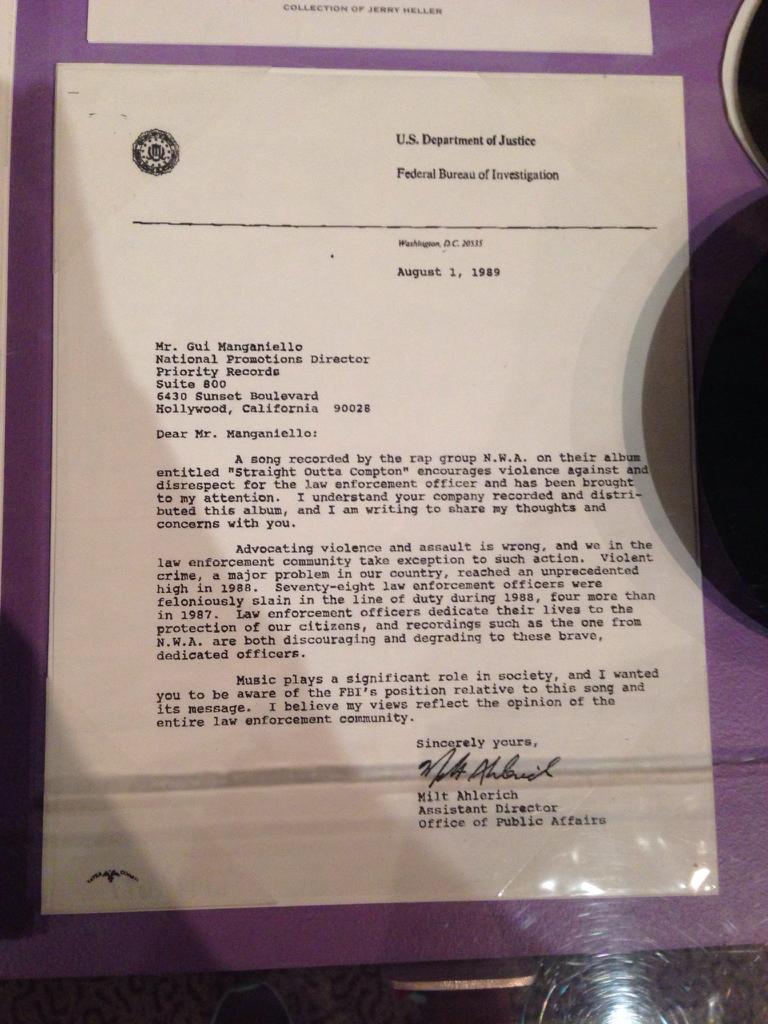
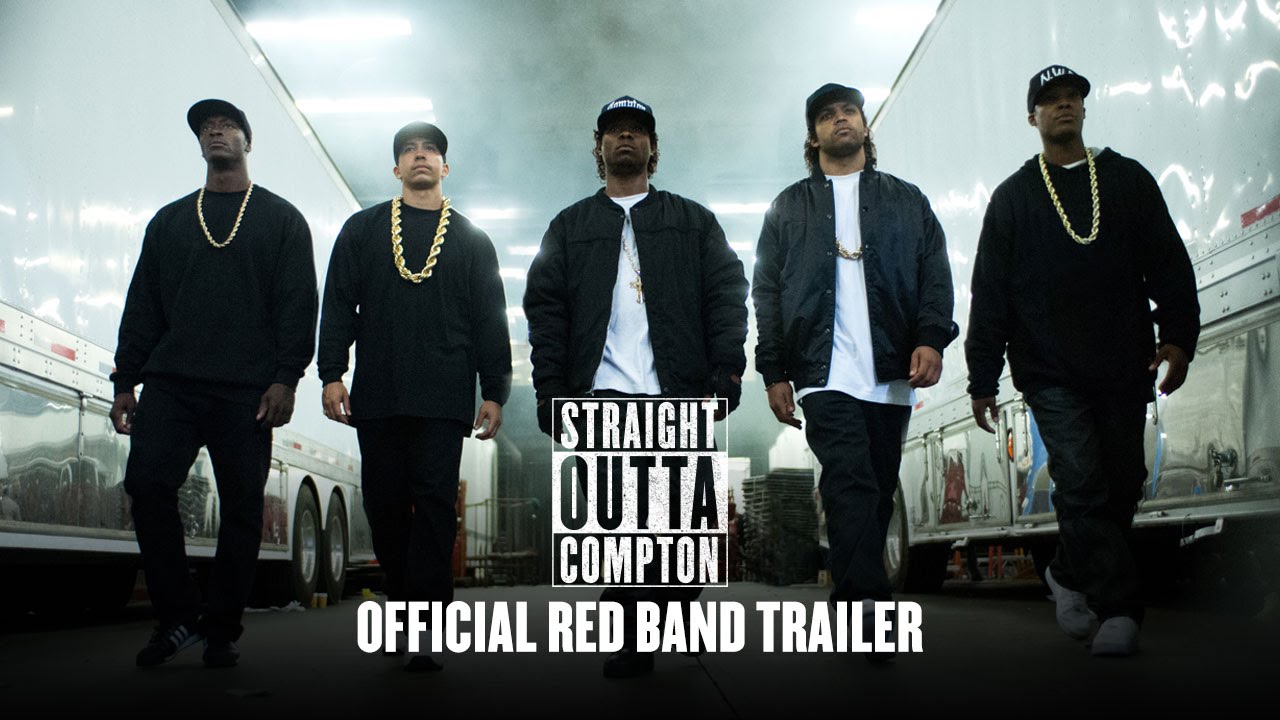
If you’ve seen the N.W.A. biopic Straight Outta Compton you undoubtedly remember the part where Jerry Heller shows the group a letter from the FBI that referenced the song “Fuck tha Police”. According to the film, Heller was shook by being contacted by the feds, whereas the Eazy-E and the group decided to send it to the press and use it for publicity. While this letter as presented here doesn’t read as threatening as the Heller character from the movie made it seem, sending it to the press was a good promotional movie for the group and helped spark more interest in the album Straight Outta Compton.
But the movie, as it turns out, took some liberties with the story.
What Actually Happened
The letter was not sent directly to N.W.A. It was sent to Priority Records, the group’s Los Angeles based distributor, and addressed to president Brian Turner. It arrived on August 1, 1989, and was signed by Milt Ahlerich, Assistant Director of the FBI’s Office of Public Affairs. Ahlerich wrote on official DOJ/FBI stationery, and his tone was measured but firm. The letter claimed the song “encourages violence against and disrespect for the law enforcement officer,” and referenced the fact that 78 officers were feloniously killed in 1988 as context for why law enforcement took issue with the track.

Here is what makes the letter especially absurd in hindsight: Ahlerich had not actually heard the song. He had only read lyrics obtained from unnamed law enforcement officials. The FBI did not own a copy of Straight Outta Compton. The bureau was essentially forming an official position on a piece of music based entirely on second-hand transcripts handed to them by cops who had a problem with the content in the first place.
The Censorship Climate of 1989
To understand why this letter exists, you have to understand the environment around it. By 1989, the Parents Music Resource Council (PMRC), co-founded by Tipper Gore, had already successfully pressured record labels into placing explicit content stickers on albums. The Senate had held hearings on explicit lyrics in 1985, with artists like Dee Dee Ramone and John Denver testifying. Prince, Madonna, and Cyndi Lauper had all faced scrutiny. Parents groups and law enforcement agencies were actively coordinating to challenge rap and rock music that they deemed dangerous or indecent.
N.W.A. was operating in this climate when they released Straight Outta Compton in late 1988. The album featured three full tracks that drew fire: “Gangsta Gangsta,” “One Little Budda,” and most prominently “Fuck tha Police.” The song had already been banned by radio stations, pulled by retailers, and flagged by library associations before the FBI ever got involved. The letter was not the opening salvo. It was the federal government’s way of wading into a conversation that was already happening in cities across America.
The Group’s Response
When Priority Records president Brian Turner received the letter, his company responded with a one word statement: “No comment.” The group, however, saw an opportunity. Eazy-E reportedly called the letter “the best publicity we ever got.” Rather than hide from the federal scrutiny, N.W.A. forwarded the letter to press outlets and let the story spread. The Village Voice published it on October 10, 1989, and the Washington Post and Los Angeles Times both ran coverage of the bureau’s unusual correspondence with a small Los Angeles record label over a rap track.
The reaction from civil liberties groups was swift and critical. The ACLU condemned the letter as inappropriate for a government agency to influence artistic expression. Barry Lynn of the ACLU called it “censorship by intimidation,” arguing that a federal letter to a distributor over music content set a dangerous precedent for government involvement in the arts. Representative Don Edwards, a California Democrat and chair of the House Judiciary Subcommittee on Civil and Constitutional Rights, argued publicly that the FBI should not be in the business of judging music. He told reporters that artistic expression should be protected from government interference, and that the letter represented an overreach by federal authorities into a matter that belonged in the cultural arena, not the legal one.
Ahlerich defended the letter by saying he was simply providing factual context so that distributors could make informed decisions. He claimed the letter reflected the official position of the FBI, though he later acknowledged that the bureau does not adopt official positions on music. The distinction was thin, and critics were right to question it.
The Tour Pressure
The letter had a ripple effect beyond press coverage. An informal network of police organizations and local promoters circulated the document and used it to pressure venues into canceling N.W.A. shows. Several tour dates were jeopardized as a result. Detroit, Washington D.C., Chattanooga, Milwaukee, and Tyler, Texas all saw shows threatened with cancellation or subject to heavy security restrictions. In Detroit, police confronted the group during a show at Joe Louis Arena and threatened to arrest them if they performed certain tracks from the album. The confrontations were not isolated incidents. They were part of a coordinated campaign to make the group’s tour as difficult as possible.
N.W.A. adapted by sometimes altering their live performances, omitting certain lines from “Fuck tha Police” to avoid triggering local authorities. But they did not stop performing the material. The group understood that the controversy was part of the appeal.
Straight Outta Compton the Movie vs. Reality
The 2015 film compressed the timeline and dramatized the letter’s arrival. In the movie, Jerry Heller receives the letter and shows it to the group in a scene where the weight of federal attention feels immediate and threatening. In reality, the letter went to Priority Records and the group found out about it after the fact. Heller did not receive a federal letter at the office and dramatically present it to his artists in a back room. The group leveraged the situation after the fact rather than reacting to it in real time.
The movie also frames the letter as a turning point in the group’s notoriety. The real story is more complicated. The letter came after the song had already been banned and after the group had already faced significant pushback from local authorities across multiple cities. It was one episode in a longer campaign of censorship attempts that included retailer pressure, radio bans, and venue cancellations. The letter was notable precisely because it came from the FBI, but it was not the opening move.
The Song’s Actual Meaning
N.W.A. always maintained that “Fuck tha Police” was not a call to action. It was a description of reality as they experienced it living in Compton and South Central Los Angeles. The track was rooted in actual encounters with the Los Angeles Police Department, encounters that the group members and their communities had lived through. The lyrics were angry and provocative, but they were not incitements. They were testimonies. The distinction mattered to the group, and it should matter to anyone trying to understand why a piece of art generated a federal response in the first place.
The lyrics were angry and provocative, but they were not incitements. They were testimonies. The distinction
The fact that the FBI letter went to a distributor and not to the artists themselves tells you something important. The bureau was applying pressure through commercial channels because direct action against the group would have raised serious First Amendment concerns. By targeting the record label, law enforcement could argue they were giving distributors information rather than censored art. The strategy was deliberate and calculated.
Legacy
The August 1, 1989 letter from Milt Ahlerich to Brian Turner at Priority Records has become one of the most documented episodes in the history of hip hop’s confrontation with authority. It sits alongside the Senate hearings, the PMRC stickers, and the retail bans as part of a broader pattern of institutional resistance to rap music that challenged prevailing narratives about race, policing, and free expression.
Eazy-E was right about one thing. The letter turned out to be great publicity. But it also represented something more serious than a marketing opportunity. It was a moment when the federal government weighed in explicitly on the question of whether art could be considered dangerous, and whether distributors should bear some responsibility for the content they moved. That question did not go away when the letter stopped circulating. It just found new forms.
Read the text of the letter:
U.S. Department of Justice
Federal Bureau of Investigation
Washington, D.C. 20535
August 1, 1989
Mr. Gui Manganiello
National Promotions Director
Priority Records
Suite 800
6430 Sunset Boulevard
Hollywood, California 90028
Dear Mr. Manganiello:
A song recorded by the rap group N.W.A. on their album entitled “Straight Outta Compton” encourages violence against and disrespect for the law enforcement officer and has been brought to my attention. I understand your company recorded and distributed this album, and I am writing to share my thoughts and concerns with you.
Advocating violence and assault is wrong, and we in the law enforcement community take exception to such action. Violent crime, a major problem in our country, reached an unprecedented high in 1988. Seventy-eight law enforcement officers were feloniously slain in the line of duty during 1988, four more than in 1987. Law enforcement officers dedicate their lives to the protection of our citizens, and recordings such as the one from N.W.A. are both discouraging and degrading to these brave, dedicated officers.
Music plays a significant role in society, and I wanted you to be aware of the FBI’s position relative to this song and its message. I believe my views reflect the opinion of the entire law enforcement community.
Sincerely yours,
[Signature]
Milt Ahlerich
Assistant Director
Office of Public Affairs






5 thoughts on “The FBI letter sent to N.W.A. in 1989”