
On Trial for Tupac’s Murder, Keffe D is Judged by His Own Interviews
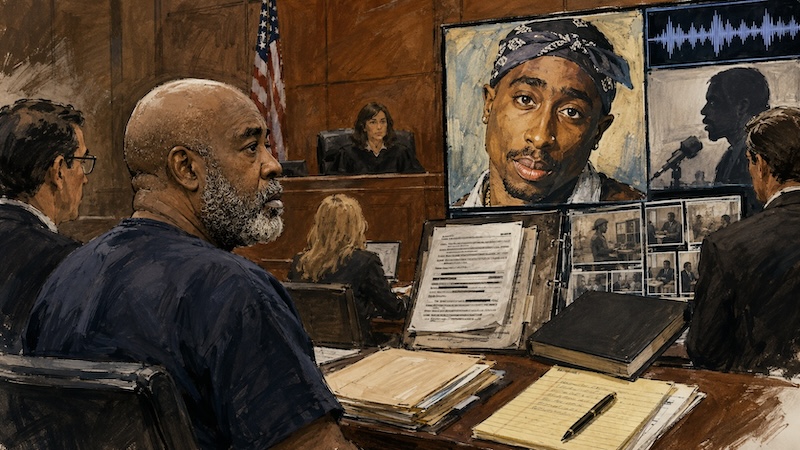
Nearly 30 years after Tupac Shakur was shot in Las Vegas, a jury is hearing a murder case built largely on accounts the defendant gave long after the crime — to police, to a co-author, and to documentary cameras. Jury selection began August 10, 2026, and a panel of six men and ten women, including four alternates, was seated August 13. Opening statements followed on August 17, and testimony is now underway; jurors have already heard portions of a recorded 2008 police interview played in court. Duane “Keffe D” Davis, 63, has pleaded not guilty to murder with a deadly weapon with intent to promote, further, or assist a criminal gang.
The trial will address a specific criminal charge against one defendant. It will also require audiences to consider a difficult question: What happens when personal accounts previously presented in police interviews, books, documentaries, and public conversations are admitted as evidence in court?
Davis has spoken about Shakur’s killing in several settings, and prosecutors have signaled that those statements are the heart of their case rather than physical evidence. In a pretrial filing, prosecutors wrote that establishing the credibility of Davis’ own accounts is central to the state’s case. They allege he orchestrated the shooting and supplied the gun; they do not allege he fired it. His defense says there is no evidence he directed the shooting and argues that the state relies on witnesses who were not present. Those competing positions establish the legal dispute. They also show the limits of public records based on memory, financial interests, reputation, law enforcement interviews, and decades of repetition.

One Story, Several Uses
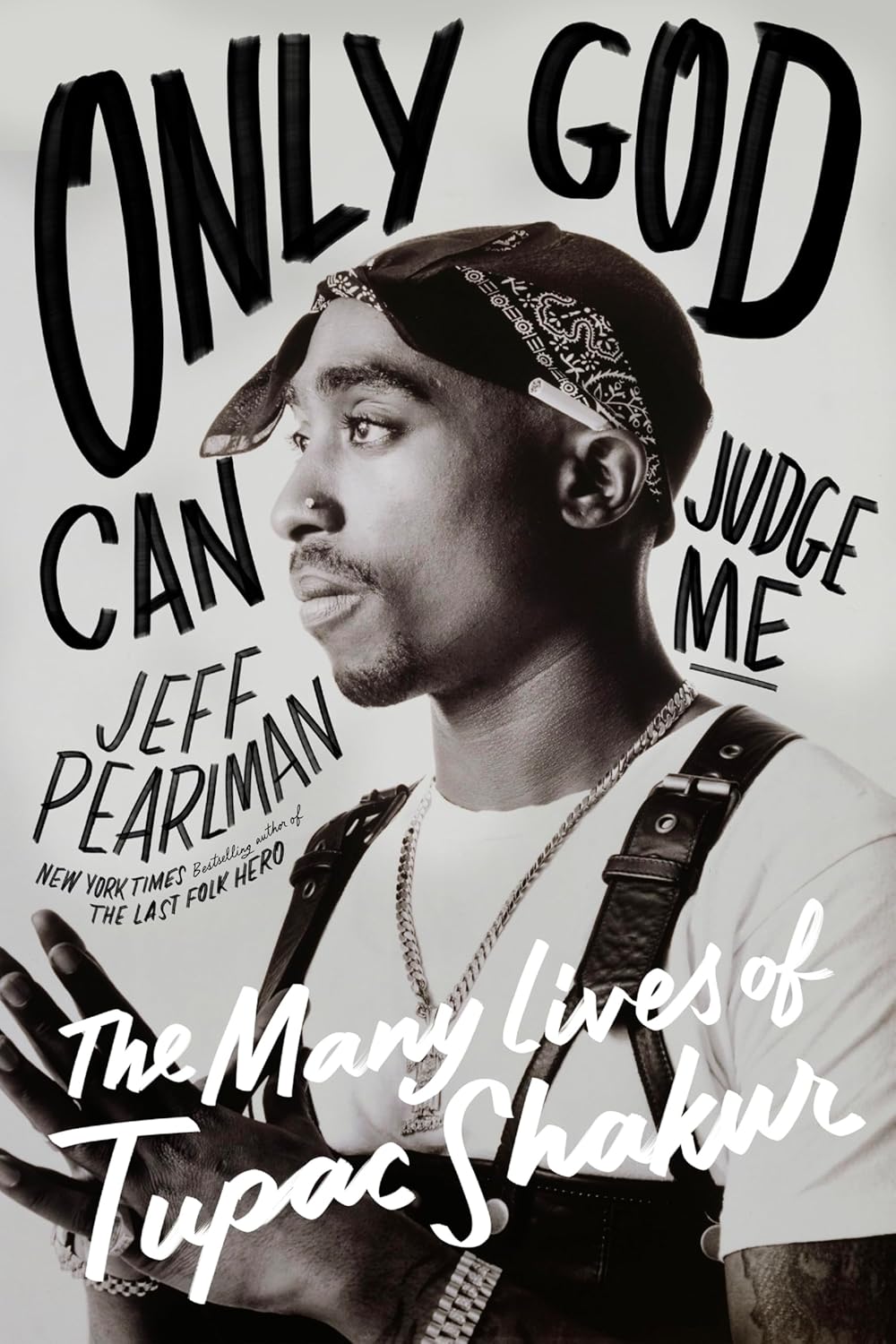
Shakur was shot near the Las Vegas Strip on September 7, 1996, while riding in a BMW driven by Death Row Records co-founder Marion “Suge” Knight. Shakur died six days later at age 25. For years, the killing generated reporting, documentaries, books, interviews, online debate, and rumor. Each format followed its own standards. A police interview serves an investigation. A memoir sells a life story. A documentary presents selected events for an audience. A courtroom applies rules of evidence and permits challenges before a jury.
The same statement does not have the same purpose or evidentiary value in each setting. Context matters. Who asked the question? What protection did the speaker believe existed? Was the account edited? Was it later repeated in public? Did a coauthor shape the language? Has another source supported it?
These questions are relevant to the Davis case. In July, Judge Carli Kierny ruled that prosecutors were permitted to use a 2008 interview Davis gave to law enforcement as part of a proffer session. Defense attorney Michael Sanft argued that Davis believed the discussion was protected by the proffer agreement and that detectives told him it would not be used against him. Prosecutors argued that Davis later repeated key material publicly, undermining any expectation of confidentiality. Kierny ruled the interview admissible, and on August 20 the recording itself was played for the jury, with Davis heard walking detectives through the night of the shooting.
The interview was later reported outside the investigation. Former Los Angeles Police Department detective Greg Kading used it in his book, Murder Rap: The Untold Story of the Biggie Smalls & Tupac Shakur Murder Investigations, published in 2011. Material from the account later appeared in documentary programming, including footage later incorporated into other productions about Death Row Records. Information first gathered by law enforcement was later presented in public accounts of two of rap’s most examined deaths.
The Memoir as a Legal Document
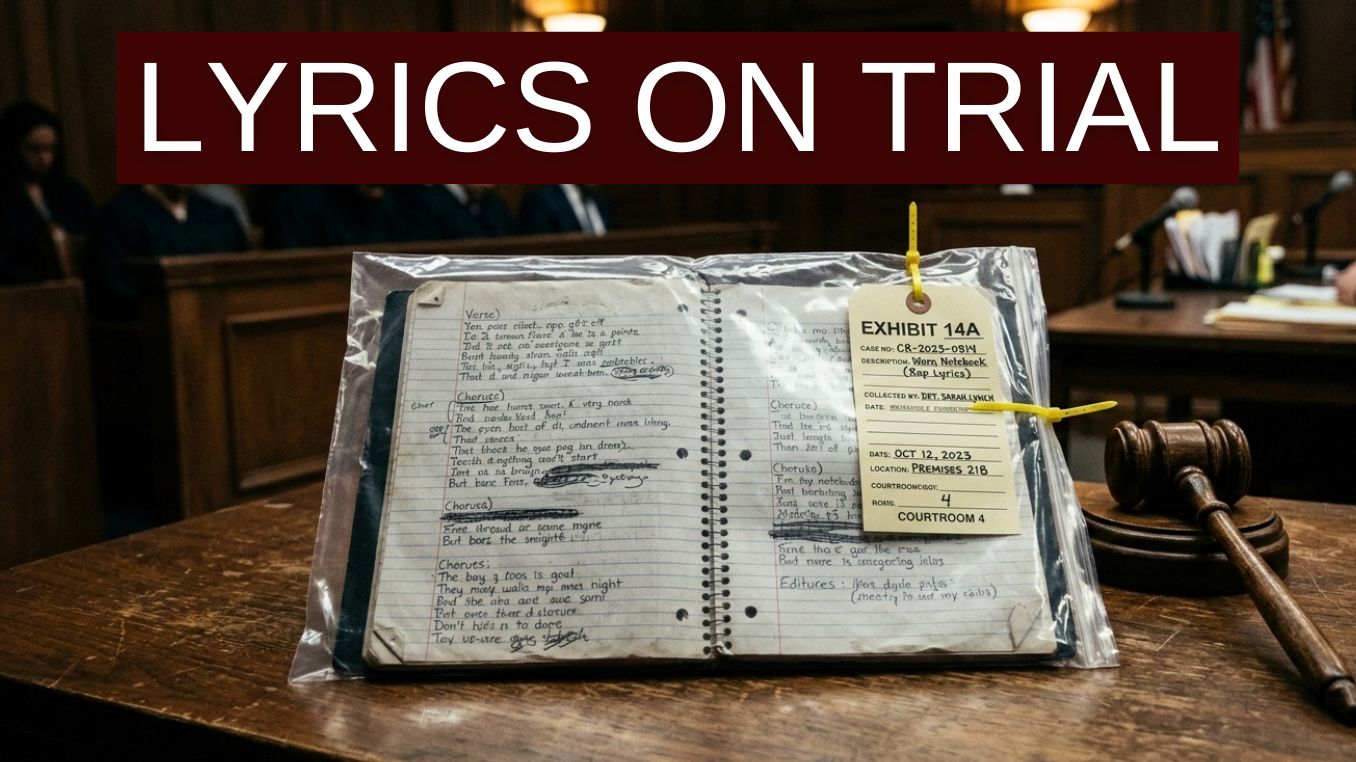
Kierny also allowed Davis’ 2019 memoir, Compton Street Legend, into evidence. The defense argued that the book was fictionalized for profit and written with a coauthor, making individual authorship unclear. The judge found that Davis had adopted the book as his own, pointing to a prior interview in which he described the book as the “real truth,” alongside his broader public promotion of it as a truthful account.
That ruling does not establish that every statement in the memoir is true. Admissibility means the jury is permitted to hear the material. The defense is still free to challenge its accuracy, circumstances, and weight — and has signaled it will: since his arrest, Davis has said his prior statements, including in the book, were false and made to sell copies, and he has blamed a co-author for inserting inaccurate material. That distinction between admissible and true is essential, especially in a case with extensive public discussion and many disputed claims.
Memoirs combine recollection with decisions about presentation. Davis presented his memoir publicly as a truthful account, according to the judge’s ruling. Yet a statement prepared for a book or promotional appearance does not receive the same procedural testing as sworn testimony. Repetition also does not provide independent confirmation when later versions depend on one speaker.
The jury will consider the statements according to courtroom instructions, alongside testimony and other admitted evidence. Readers and viewers rarely receive equivalent information about how to assess a claim. A statement might be repeated for years without a clear description explaining whether it came from a confidential interview, a promotional appearance, a secondhand recollection, or a verified document.
That is what makes Davis’ defense unusual, not weak on its face: he is not claiming he was never involved or was never present. He is arguing that the version of events he told police, a co-author, and documentary cameras over sixteen years was itself invented — for a book deal, for status, for money.
Who Isn’t Testifying
The trial’s witness list underlines how much of this case rests on people who are no longer available to the jury or who have declined to take part. Prosecutors have indicated they expect to call between 35 and 45 witnesses. Sean “Diddy” Combs, whom Davis has claimed in past interviews wanted Shakur and Knight killed, was included on an early potential witness list but attorneys have said he will not testify. Knight, who is serving a lengthy prison sentence in California on an unrelated conviction, told a reporter he does not plan to testify and said the trial “has nothing to do with” him. Orlando Anderson, Davis’ nephew and the person Davis has said fired the fatal shots, was killed in a 1998 shooting and cannot be questioned at all. That absence of surviving, willing witnesses is part of why Davis’ own recorded and written statements carry so much weight in the prosecution’s case.
Why the State Does Not Need to Allege Davis Fired
The charge has prompted confusion because prosecutors do not accuse Davis of pulling the trigger. Nevada law provides a direct explanation. Under NRS 195.020, a person who directly commits a crime, aids or abets it, or counsels, encourages, commands, induces, or procures another person to commit it is treated as a principal.
That statute explains the prosecution’s legal theory. It does not prove the allegations. Prosecutors must still establish the required elements beyond a reasonable doubt. The defense maintains that Davis did not direct the shooting and that the state lacks sufficient evidence connecting him to such a plan.
The gang allegation requires similar care. Nevada’s criminal-gang enhancement law, NRS 193.168, calls for a separate finding beyond a reasonable doubt before an added penalty applies. Describing the charge is not the same as the state having proven its account of motive, membership, or intent — that remains for the jury to decide.
One Source, Several Formats
The 2008 police interview, the Compton Street Legend memoir, and the Death Row Chronicles documentary interview can look, on the surface, like three separate accounts corroborating each other. They aren’t. All three originate with Davis himself, given at different times, to different audiences, under different incentives — a proffer session meant to protect him from prosecution, a book he was paid to write, a docuseries he agreed to appear in after his cancer diagnosis, saying he had “nothing else to lose.” Repetition across formats is not the same as independent confirmation when one person is the source of all of it. That is the specific evidentiary problem at the center of this trial: prosecutors are treating Davis’ own consistency across those formats as proof, and the defense is treating that same consistency as evidence of a well-rehearsed story rather than a true one.
What the Trial Will and Will Not Decide
Tupac Shakur’s death has prompted unresolved grief and public attention for three decades. A criminal trial will decide whether the state has proved its case against Davis. It will not resolve every account associated with the shooting, nor will it make decades of media coverage uniformly reliable. It may not even settle who fired the fatal shots — prosecutors and reporters covering the proceedings have noted that question could remain unresolved regardless of the verdict.
This is not a case built on circumstantial evidence and silence. Davis is, by his own description, the only surviving person who was in the car when the shots were fired, and he has talked about that night for close to two decades — to federal and Las Vegas police in 2008 and 2009, on BET’s Death Row Chronicles in 2018, and at length in Compton Street Legend in 2019. Prosecutors have told the court their case largely consists of asking the jury to believe those earlier statements. That is what makes Davis’ defense unusual, not weak on its face: he is not claiming he was never involved or was never present. He is arguing that the version of events he told police, a co-author, and documentary cameras over sixteen years was itself invented — for a book deal, for status, for money — and that a jury should not convict him on the word of a man his own former attorney publicly called a liar.







3 thoughts on “On Trial for Tupac’s Murder, Keffe D is Judged by His Own Interviews”