
Tidal Says No Royalties for Fully AI Generated Music
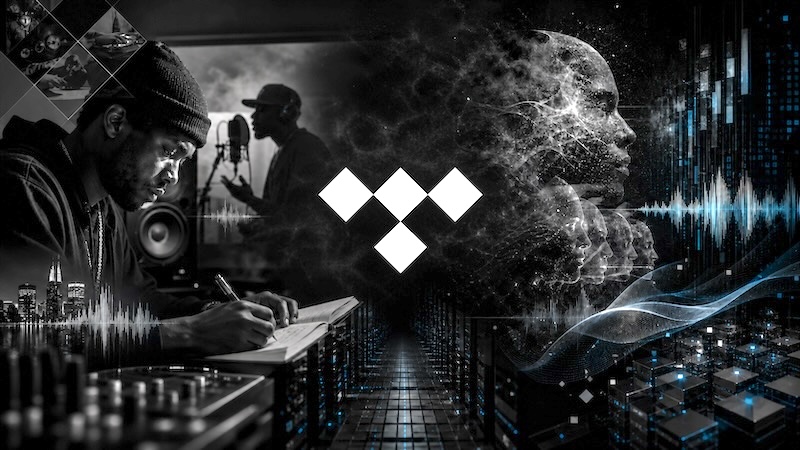
Tidal just made one of the clearest moves yet in the streaming fight over AI music, and the part that matters most is not the label on the song. It is the money.
On June 29, Tidal announced a new AI policy that lets wholly AI-generated music stay on the platform, while cutting it off from royalty attribution. The company also said it would begin showing an AI tag on tracks it identifies as 100 percent AI-generated in mid-July. By July 15, Tidal’s support documentation said those labels were live, that listeners could switch AI-labeled content off in settings, and that music Tidal identifies as wholly AI-generated is not eligible for royalties. That sequence matters because it shows where the debate is heading. The fight is moving away from the broad moral argument over what AI systems learned from artists and toward a harder business question: when synthetic music floods a streaming service, who gets paid, who gets buried, and who gets protected?
For Hip Hop, that is not a side issue. Rap has always argued over authorship, technology, performance, and credit. On the independent side of the culture, a producer leases a beat, a rapper pays for an exclusive, and a producer tag works like a stamped signature inside the record. Those details point back to a human chain of labor and payment. Tidal’s policy matters because it does not try to ban all AI use. It tries to draw a line between AI as assistance and AI as the whole product.

The New Fight Is About Royalty Dilution
Tidal’s official policy says the company will not knowingly attribute royalties to music it identifies as wholly AI-generated. Its terms go even wider, giving Tidal the right to exclude AI-generated content from royalty calculations and remove it when the company believes it is tied to fraud. That is a business rule, not a philosophical one. It tells artists, distributors, and rights holders that Tidal sees fully generated tracks as a threat to the pool of money meant for human-made work.
That point gets lost when AI music gets covered as a culture-war story. The deeper issue for artists is dilution. Streaming payouts are already thin for independent rap acts, beatmakers, and small labels. If low-cost synthetic uploads can pile into the same system at scale, they do not just clutter search results. They compete for recommendation slots, listener attention, and payout share. In that frame, Tidal is not only asking whether AI music belongs on the service. It is asking whether synthetic output should be treated like the same kind of labor as a record written, performed, and built by people.
TechCrunch’s reporting made that position plain: fully AI-generated tracks can be tagged, denied royalties, and shut out of direct-to-fan sales. For independent artists, that means Tidal Upload stays a monetization route for human-made work, not for uploads Tidal classifies as wholly AI-generated.
Tidal Left the Door Open for AI Assistance
The detail that makes this policy more serious than a headline is the gray area it leaves in place. Tidal’s support page says the company is focusing its current enforcement on wholly AI-generated music because detection tools can still produce false positives and false negatives. It even says some partly AI-generated content may stay unlabeled for now. That is an honest admission that the line is easier to announce than to enforce.
Still, it is a useful line. Hip Hop producers are already working in a studio world where AI can separate stems, clean vocals, suggest harmonies, mimic textures, build demo ideas, and speed up mastering. A rapper using AI to sharpen one part of the process is not the same thing as a text prompt turning into a finished track with no real human performance behind it. Tidal’s policy leaves room for that distinction, at least for now.
That matters because rap has a long history of turning new tools into accepted practice without giving up human authorship. Samplers changed production. Auto-Tune changed vocal texture. Digital audio workstations changed how records got built and edited. AI assistance may settle into that same category for some uses. Fully generated songs that can be uploaded in bulk, tagged with search-friendly names, and pushed into recommendation systems are a different problem. Tidal is treating those uploads less like new art and more like a platform integrity issue.
The deeper issue for artists is dilution. Streaming payouts are already thin for independent rap acts, beatmakers, and small labels. If low-cost synthetic uploads can pile into the same system at scale, they do not just clutter search results. They compete for recommendation slots, listener attention, and payout share.
Trust Has Become Part of the Product
This is also about listener trust. Tidal’s July 15 support update says users can turn off AI-labeled music in settings, and the service will remove it from refreshed recommendations. That is a direct product decision. Tidal is saying transparency is not enough by itself; users also need control over what enters their listening environment.
Deezer has been moving in a similar direction, but the clearest comparison is on platform policy, not sentiment. Deezer’s AI detector page says the service has detected more than 13.4 million AI tracks in 2025, labels AI-generated content, and keeps AI music out of algorithmic and editorial recommendations. That tells the same story from a different angle. Streaming services are starting to treat AI music as a trust-and-traffic problem, not only as an innovation story.
That is where the economics meet the audience. If a platform cannot keep fake artist uploads, impersonation attempts, and mass-produced synthetic songs from muddying search and recommendation systems, users lose faith in the service. Tidal’s terms now say AI labels are done on a best-efforts basis and that detection is not guaranteed to be perfect. Even with that caveat, the company is still making a bet that drawing a visible line is better than pretending the distinction does not matter.
Why Hip Hop Will Feel the Pressure Early
Hip Hop is one of the first places this policy hits hard because so much of the genre’s economy is tied to identity. A rap voice is not just sound. It is reputation, locality, history, and market value. A producer tag is not just branding. It is authorship. A lease beat, an exclusive, and a feature verse all carry a paper trail, even in the informal corners of the business. A wholly synthetic upload can copy the texture of that labor without carrying the same human claim to payment or credit.
Tidal’s policy names that risk in business language. The company says it may remove AI-generated music connected to fraud, including music that deceives listeners, exploits a person’s or group’s name or likeness, interferes with authentic artists and their audiences, or shows unusual upload or streaming activity. The Verge highlighted that part of the rollout because it shows Tidal is thinking past the question of taste and into the question of manipulation.
For independent rap artists, that distinction matters more than any broad statement about the future of creativity. Most working artists do not need a platform to settle every ethics debate around model training before taking action. They need platforms to keep royalty pools from being watered down by synthetic bulk uploads and fake records. They also need some protection against a market where a machine-made song can imitate the shape of artist labor while skipping the people who normally get paid along the way.
None of this settles the larger AI argument. Tidal’s June 29 policy note says there is still an open debate over whether some AI-generated music built from fairly licensed models should earn royalties in the future. But Tidal did something more immediate than wait for consensus. It treated fully generated music as a category that can stay visible while losing its claim on artist royalty money.
That is the next AI line in music. Not a total ban. Not a free pass. A line around compensation, trust, and the right of human artists to keep their work from being drowned in a flood of synthetic output. In Hip Hop, where the link between voice, labor, and identity has always been central, that line is going to matter fast.
What are your thoughts?




2 thoughts on “Tidal Says No Royalties for Fully AI Generated Music”