
Ice-T Updates “Cop Killer” to Confront ICE
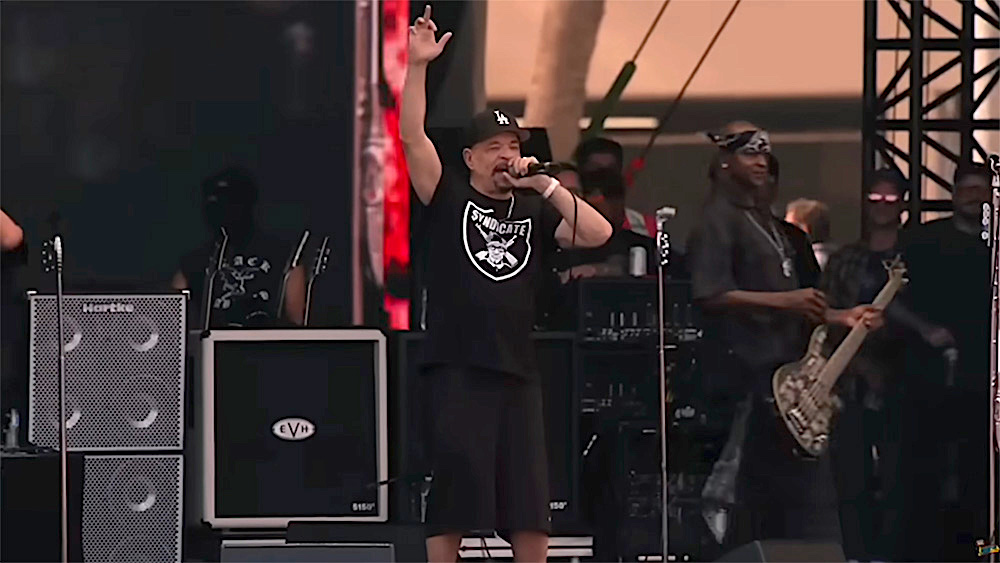
When Ice-T walked onstage with Body Count recently, few expected a rewrite of one of the most controversial protest songs in modern music history. But as the band launched into Cop Killer, Ice-T paused to address the crowd. He told them the song was being dedicated to Immigration and Customs Enforcement agents. Then he said he had changed the lyrics. Instead of “Cop Killer,” he shouted: “ICE Killer.”
The moment, captured on fan video and circulated widely online, came in response to the killing of Renee Nicole Good, a mother who was shot and killed by ICE agent Jonathan Ross during a federal operation in Minneapolis earlier this year. Video footage shows Good speaking calmly to the agent moments before she was shot as she attempted to drive away in her SUV after dropping off her six-year-old child at school. Federal officials claimed Good attempted to use her vehicle as a weapon, a justification Minneapolis Mayor Jacob Frey publicly rejected. Ice-T rejected it as well.
The lyric change was brief but the intent was felt.

The Incident That Prompted the Change
Renee Nicole Good was killed on January 7 during an ICE operation in a residential neighborhood. According to video evidence referenced by multiple outlets, Good appeared polite and non-confrontational before being shot. ICE officials described the incident as self-defense.
The following day, during an ICE operation in Portland, Oregon, two more people were shot by a Customs and Border Protection agent inside a vehicle. Again, officials claimed the driver attempted to use the car as a weapon.
These incidents came amid ongoing scrutiny of ICE tactics, particularly the use of force during raids and stops. While federal agencies framed the shootings as justified, local officials and community members questioned those claims.
What Ice-T Did on Stage
At the live show, Ice-T introduced the song by addressing ICE directly. He said the performance was “going out to all the ICE agents,” then stated plainly that he had changed the words.
“This is going out to all the ICE agents, running up in muthf*ckas. F*ck ’em all. I don’t give a f*ck,” he said before adding, “I changed the words, ICE KILLER!”
The structure of the song remained intact. The opening lines, imagery, and cadence were the same. Only the target shifted. “Cop Killer” became “ICE Killer.”
Fans responded quickly on social media. Comment sections filled with fire emojis and comments praising Ice-T for staying consistent with his politics. Some fans noted that he had never softened his stance, even after decades in entertainment and a long-running television career.
Why “Cop Killer” Was Controversial in the First Place
When “Cop Killer” was released in 1992, it immediately became one of the most debated songs in American popular culture.
The track appeared on Body Count’s self-titled debut album during a period of intense conflict between law enforcement and Black communities, particularly in Los Angeles. The Rodney King beating and the subsequent uprising were recent events. Public trust in policing was low, and tensions were high.
“Cop Killer” was written from the perspective of a character pushed to violence by repeated police brutality. Ice-T repeatedly described the song as a protest record, not an instruction manual. That distinction did not prevent backlash.
Then-President George H.W. Bush and Vice President Dan Quayle publicly condemned the song, calling it dangerous and irresponsible. Police unions organized boycotts. Retailers refused to stock the album. Ice-T’s label, Time Warner Inc., received bomb threats.
Under mounting pressure, Ice-T and the label removed the song from later pressings of the album. He later parted ways with the company. At the time, Ice-T defended the song as an expression of rage rooted in lived experience. “The enemies on that album are racist people, parents who teach racism to their kids, and brutal police,” he said. “If those are my enemies, so be it.” The song was later re-released in 2005 on Body Count: Live in LA.
Why ICE Became the New Target
By updating the song’s lyrics, Ice-T reframed its original message for a different institution.
ICE operates as a federal agency with broad authority to detain, arrest, and deport individuals. Civil rights advocates have long raised concerns about excessive force, lack of transparency, and limited accountability within the agency.
Unlike local police departments, ICE agents operate under federal jurisdiction, often with fewer mechanisms for local oversight. In cases involving shootings, federal agencies frequently conduct internal reviews.
The Renee Nicole Good case, followed closely by the Portland shootings, placed ICE enforcement tactics under renewed scrutiny. Ice-T’s lyric change directly referenced that moment. Rather than creating a new song, he chose to repurpose one that already carried historical weight.
Reception and Context – Reigniting Hip-Hop’s Protest Lineage
Video of the performance circulated widely on Instagram and hip-hop media platforms. Fans praised Ice-T for maintaining a consistent political stance decades into his career. Others noted the contrast between his actions and those of artists who have avoided political commentary in recent years.
Hip-hop media outlets framed the performance as a reminder of the genre’s protest roots. Commentary emphasized that Ice-T was not revisiting the song for shock value, but recontextualizing it in response to current events.
Protest Music as Continuity, Not Nostalgia
Ice-T’s career has always existed at the intersection of confrontation and commentary. From early gangsta rap records to Body Count’s metal catalog, his work has consistently addressed state violence, racism, and power.
“Cop Killer” was never an isolated provocation. It was part of a broader tradition within hip-hop that treats music as a response to real conditions.
Public Enemy’s critiques of policing and media.
N.W.A’s accounts of harassment and surveillance.
KRS-One’s framing of hip-hop as education.
These records functioned as cultural reporting when mainstream outlets often ignored the same issues. Ice-T has never shied away from these type of critical or controversial topics. The title of his third album was The Iceberg/Freedom of Speech… Just Watch What You Say! afterall. Ice-T’s “Colors” is another notable example of poignant commentary and storytelling that gives a vivid picture into the mind and world of gang life. Ice-T’s recent performance fits squarely within that lineage.
Why the Moment Resonates Now
The lyric change did not introduce new arguments. It highlighted continuity. The controversies surrounding “Cop Killer” in 1992 were rooted in concerns about police power and accountability. The current debate around ICE involves similar questions, applied to a federal agency operating with broad discretion. By changing a single word, Ice-T drew a line between past and present enforcement practices. The gesture suggested that while the names of institutions change, the underlying conflicts remain.
Ice-T Isn’t New to This
Ice-T has been active in music, television, and film for decades. His continued willingness to engage politically stands out in an industry where longevity often comes with caution. Rather than distancing himself from his most controversial work, he revisited it. Rather than softening its message, he sharpened it. The performance did not resolve the issues it addressed. It documented them. And in hip-hop, documentation has always mattered. It’s an element we desperately need more of today.










6 thoughts on “Ice-T Updates “Cop Killer” to Confront ICE”