
The Bronx Is Getting Its Hip Hop Museum
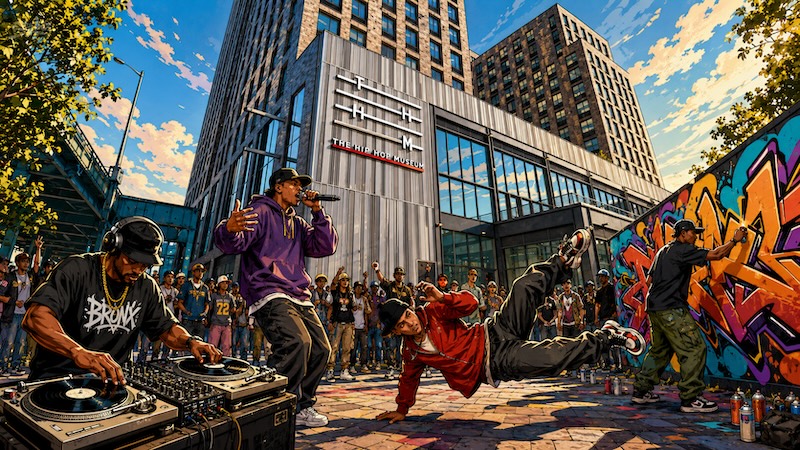
How a $1 Million State Bet Is Bringing Hip Hop’s Forever Home to Life
By the time this building opens its doors in the fall of 2026, more than fifty years will have passed since Clive Campbell set up two turntables in the recreation room of a Bronx apartment building and changed the world.
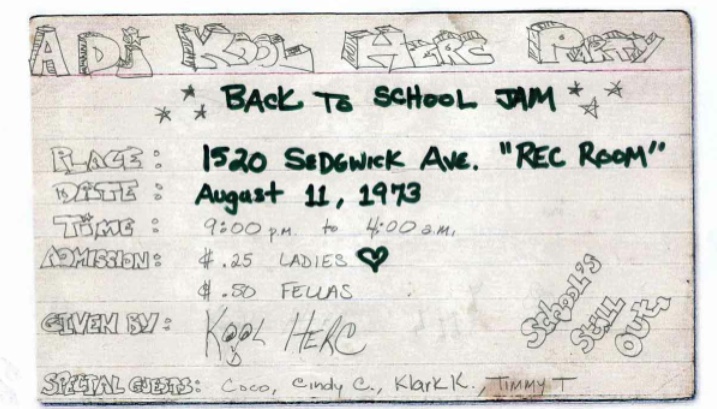
On August 11, 1973, DJ Kool Herc threw a back-to-school party at 1520 Sedgwick Avenue in the Morris Heights neighborhood of the Bronx. He isolated the drum break from funk records and looped it between two copies of the same record, giving the dancers on the floor an extended moment to move. Nobody in that room called what they were doing “hip hop.” They were just having a party. But that party started something — DJing, MCing, breakdancing, graffiti art, a full culture — that now generates tens of billions of dollars a year and reaches every corner of the globe.
For most of that fifty-year run, there was no museum. No official institution in the Bronx dedicated to preserving the history of what was born there. That absence is finally being corrected.
In late May 2026, New York State tucked a $1 million operating aid line into its $269 billion state budget for The Hip Hop Museum, the 52,000-square-foot institution rising at Bronx Point along the Harlem River. The line item, first reported by the New York Post, marks the first new state-level operating aid the museum has received since before the pandemic. It comes from the same Albany that also approved Speaker Carl Heastie — a Bronx-born lawmaker and longtime supporter of the project — alongside Governor Kathy Hochul and Senate Majority Leader Andrea Stewart-Cousins.
Bronx Assemblyman Landon Dais did not equivocate about what the museum means. “The museum will be a cultural anchor in my district,” he said. “How many cities can say they created a genre of music? The money will hire local community members, celebrate a cultural identity and recognize those who helped create this genre of music.”
That is the argument, stated plainly. The Bronx gave the world hip hop. Hip Hop gave the world a culture. Now the culture deserves a home in the place where it started.
A Long Time Coming
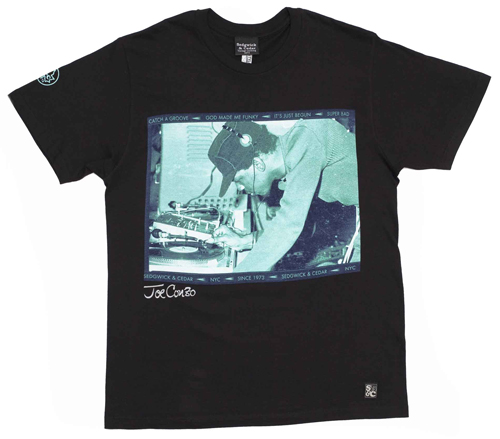
The story of The Hip Hop Museum does not begin with the groundbreaking in 2021 or the budget line in 2026. It begins in the early 2010s, when a coalition of Bronx community leaders and hip hop pioneers started pushing for a dedicated institution. Rocky Bucano, who started his career as a teenage DJ in the Bronx during hip hop’s early years, became the driving force. He co-founded what was originally called the Universal Hip Hop Museum in 2015 alongside hip hop legends Kurtis Blow, Grandwizzard Theodore, Joe Conzo Jr., and Grandmaster Melle Mel. These were not outsiders coming in to commodify someone else’s history. These were people who lived it.
The road since then has been long. Early siting discussions considered the Bronx Terminal Market area before the project landed at Bronx Point, a $349 million mixed-use development in the Lower Concourse neighborhood of the South Bronx that also delivers 542 units of permanently affordable housing and nearly three acres of public open space. A $3.5 million state capital grant came in 2019. Then the pandemic arrived and disrupted nearly everything. The original opening target of 2023 — timed to hip hop’s 50th anniversary — slipped. Then 2025 slipped too.
But the project kept moving. In 2021, at the official groundbreaking, LL Cool J, Nas, Fat Joe, Lil Kim, and Grandmaster Flash stood on the waterfront in the South Bronx and made it real. The state legislature awarded $11 million in construction funding. New Jersey Community Capital provided an $8.5 million New Market Tax Credit loan. Nas and Resorts World NYC committed $2 million through the museum’s capital campaign. The city put in nearly $20 million in construction funds. Microsoft and Warner Music Group added private support. And now comes the $1 million operating line, the kind of money that keeps the lights on, the staff paid, and the programming running once the doors open.
The museum rebranded in 2023, dropping “Universal” and landing on the simpler name: The Hip Hop Museum. The mission stayed exactly the same.
What Gets Built
The building at 585 Exterior Street will be approximately 52,000 square feet across the bottom floors of the Bronx Point complex. Architects BrandNu and Gensler designed the interior; the broader Bronx Point development was designed by S9 Architecture and Urban Atelier Group and developed by L+M Development Partners and Type A Projects.
The planned experience inside is deliberately broad. The museum calls itself “The Official Record of Hip Hop” and its collection spans 30,000 objects. The exhibits are built around all five elements of hip hop culture: DJing, MCing, breakdancing, graffiti art, and knowledge. That last element matters. Hip hop is not a music genre that got popular enough to earn a building. It is a language, a visual tradition, a philosophy about self-expression and community that came from young Black and Latino people in one of the most economically neglected urban environments in American history. The museum’s job is to hold all of that.
The planned features include a research center, archives, immersive digital installations, interactive stations, live performance spaces, and a 300-seat theater. Visitors will be able to engage with the history at multiple levels — casual fan, serious scholar, young person encountering it for the first time. Bucano has been clear that the fan base spans generations in a way few cultural institutions can match. The founders of hip hop are now in their late 60s and early 70s. DJ Kool Herc himself falls in that range. And the most influential hip hop artists working today — Kendrick Lamar, Doechii, Central Cee, GloRilla — range from their mid-20s to late 30s and pull millions of fans behind them. The museum has to speak to all of them.

The Cleveland Comparison and the Real Question
Supporters of the museum point consistently to the Rock and Roll Hall of Fame in Cleveland as the model for what a genre-specific institution can do economically. The comparison holds up. The Rock Hall draws roughly half a million visitors a year, and over 80 percent of them come from out of town. Visitor spending translates to hundreds of millions of dollars flowing through the Cleveland economy annually. Over thirty years, the Rock Hall has generated more than $2.3 billion in regional economic impact.
The question is whether the Hip Hop Museum is positioned to produce that kind of return, and the honest answer is: it depends. Cleveland’s Rock Hall is 155,000 square feet and sits in a city that has made it the centerpiece of its tourism identity. The Hip Hop Museum, at 52,000 square feet, is smaller. But it is also opening in New York City, which is not Cleveland. New York has 60 million tourists a year. The Bronx is a short subway or bus ride from midtown Manhattan. The museum does not need to make the Bronx a destination in the way the Rock Hall made Cleveland one. The infrastructure for visitors is already there. The museum just needs to give people a reason to come north of 149th Street.
There are reasons to believe it will. Hip hop is the most consumed music genre on earth. Its audience crosses every demographic line and every national border. The museum’s community programming model, its emphasis on technology and interactivity, and its connection to the living pioneers of the culture give it something the Rock Hall can’t replicate: proximity to the origin. This is where it happened. The address on Sedgwick Avenue is a few miles away. Afrika Bambaataa’s Bronx River projects are close by. The block parties that built the culture took place on streets that still exist.
Bucano put it this way at the museum’s 2025 Black Tie Gala: “It’s 55,000 square feet, and it’s dedicated to the preservation and celebration of Hip Hop on a global level, not just from the Bronx level or New York City level. We’re celebrating the global history of Hip Hop.”
Why the $1 Million Matters More Than It Looks
A million dollars is a small number relative to the museum’s $80 million construction cost. It is a small number relative to what it costs to operate an institution of this size year-round. It is not, in itself, enough to run a museum.
But that is not the only thing it is. A state operating aid line in New York’s budget is a recurring commitment. It signals that the state has moved from treating the museum as a construction project — something to build and ribbon-cut — to treating it as an ongoing institution with operational needs. It is the difference between a one-time gift and an annual acknowledgment that the place has to function, year in and year out, with staff and programming and maintenance.
It is also the kind of public commitment that loosens private money. Foundations, corporations, and major donors look at operating support from government as a signal of institutional stability. If Albany is in, the question for private funders becomes less “will this place survive” and more “how do we be part of it.”
The earmark also arrives at a specific political moment. Bronx-born Carl Heastie is the most powerful figure in the state Assembly. Governor Hochul has used hip hop culture as a point of emphasis since taking office. The Bronx’s delegation in Albany is engaged and visible. This is not a line item that squeaked through without notice. It came through because multiple people in power made it happen, and that coalition is the kind of sustained political support that an institution needs to grow.
What Preservation Actually Means
There is a quiet urgency underneath all of the economic projections and political announcements. Hip hop’s first generation is aging. Some of the pioneers are gone. DMX died in 2021. Shock G left in 2021. Biz Markie in 2021. MF DOOM in 2020. The oral histories, the original tapes, the physical artifacts from the culture’s early years are scattered across private collections, old cassettes, basement footage, and personal archives. Some of it has already been lost. Some of it is being lost right now.
The museum’s research center and archival function may be its most important long-term contribution. A permanent collection of 30,000 objects, accessible to researchers, journalists, educators, and the public, is not just a tourist draw. It is an act of cultural survival. It ensures that what happened in the Bronx in the 1970s — what Black and Latino youth built under conditions of economic abandonment — is documented and protected in a form that will outlast the people who were there.
Bucano has understood this from the beginning. He started as a teenage DJ in the Bronx. He has spent more than a decade building the institution to hold what he and his peers created. The $1 million from Albany, the $11 million in construction funds before it, the $2 million from Nas, the $8.5 million in tax credit financing — all of it is in service of that purpose.
The doors are scheduled to open in fall 2026. When they do, the building on Exterior Street in the South Bronx will become the first major institution in the United States built specifically to preserve and celebrate hip hop culture in its full breadth. Not just the music. The whole thing. And it will sit a few miles from the apartment building where a teenager with two turntables started everything.
The Hip Hop Museum is located at 585 Exterior Street, Bronx, New York, within the Bronx Point development. Opening is scheduled for fall 2026. More information at thhm.org.

7 thoughts on “The Bronx Is Getting Its Hip Hop Museum”