
Spit: How Dumbfoundead Turned Battle Rap Into a Life Story
The coyote brought a three-year-old boy across the US-Mexico border. The boy was Jonnie Park, born in Buenos Aires to Korean parents, carried into a new country with the hopes his family placed in the American Dream. Decades later, that same boy would stand on stages across the country, trading sharp wit and faster bars with some of the best battle rappers in America. Now he has written it all down.
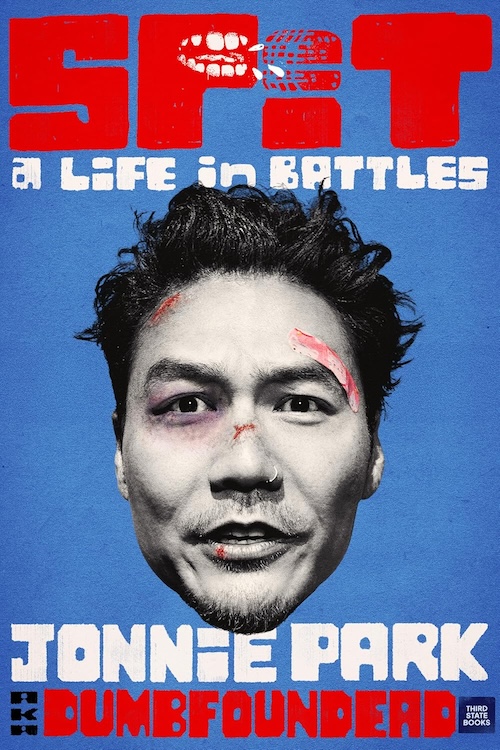
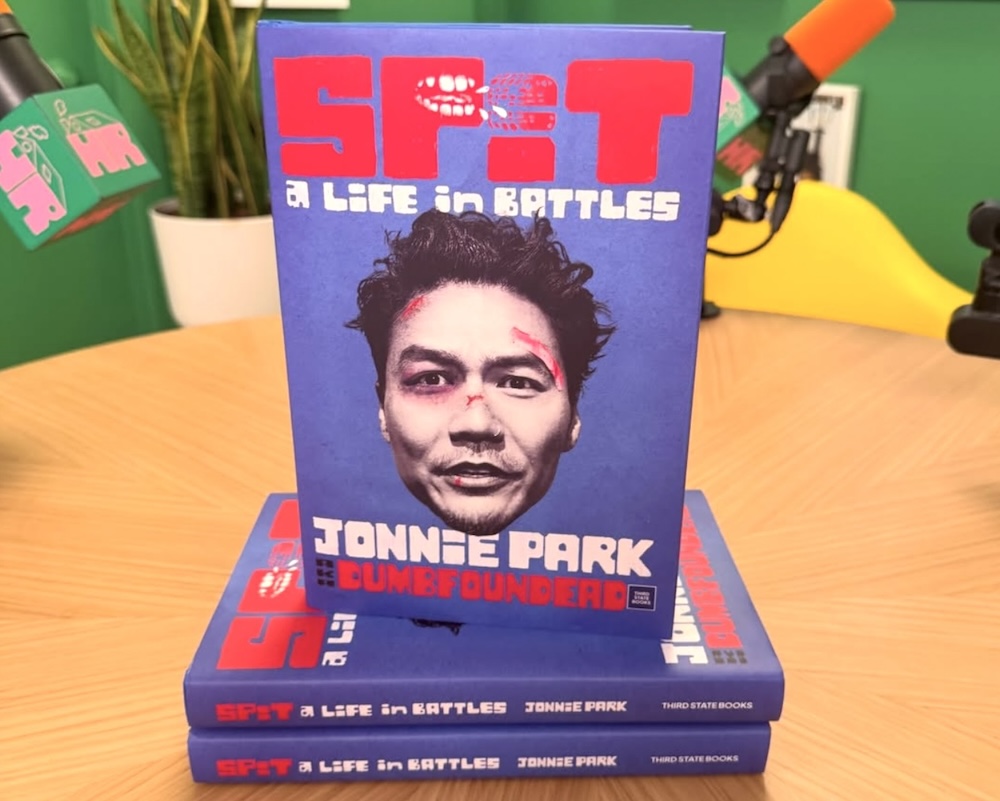
Spit: A Life in Battles arrived in bookstores on April 14, 2026, published by Third State Books. The memoir traces Park’s path from an undocumented child in Los Angeles to one of the most respected voices in underground hip-hop. It covers his upbringing in Koreatown, his start in rap at age 14, and the years that followed through the battle rap scene and beyond.
Park grew up in a household shaped by struggle. His father turned to alcohol to cope with life in a foreign country. His mother endured hardship from the outside world and from within the home. Park watched all of it as a child, absorbing the tensions that would later fuel his art. “I saw what my mom endured, from the outside world as well as inside the home,” Park said in a March 2026 interview with The Korea Herald.
Yet Park found an early outlet in humor. In classrooms at Jefferson High School, he learned his quick tongue would defuse tension and win crowds. Someone would come at him first, and he would fire back. The room would react, and he felt a pull he couldn’t ignore. “I was never the first one to attack,” Park said. “Someone would come at me first, and I would respond. Then people around me would react, and I realized, I am pretty good at this.”
From Project Blowed to the Ivy League
The instinct led him to open mics at Project Blowed in Leimert Park. The venue was raw and unfiltered. The rappers there pushed language into places Park had never heard. He was 14 years old, had never traveled south of Pico Boulevard, and suddenly he was in a room where Black kids were into anime, punk rock, and lyrics that moved like nothing on the radio. “Project Blowed freed such a big part of me,” Park told the Los Angeles Times. “This was not even like the underground mixtapes. It was the most raw and purest form of rap.”

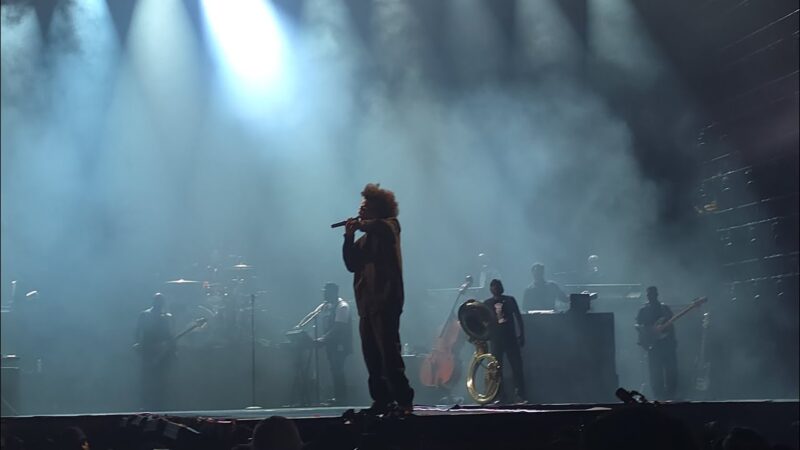
Park began freestyling in the space. He sharpened his delivery, built his reputation, and eventually took his skills into battle rap competitions across the country. The rise of YouTube brought his performances to wider audiences. He found himself booked at Harvard, Yale, and Stanford. The irony was not lost on him. He had dropped out of high school, yet the smartest crowds in America were paying to watch him perform. “They were supposed to be the smartest kids in the country, and they were paying me to perform,” Park said. “I felt like a genius.”
Battle rap gave Park something deeper than trophies. It taught him how to read a room, control a crowd, and find the truth inside a punchline. He learned audiences respected cleverness even when the words were blunt. Everyone in those circuits carried their own burdens. “Battle rap taught me everyone is dealing with something,” Park said. “It brought more empathy.”
Park released 13 albums under the name Dumbfoundead. He started the podcast Fun With Dumb in 2018. He acted in TV alongside long-time friend Awkwafina in Awkwafina Is Nora from Queens, in films including Detention and K-Pops and the battle-rap focused Bodied produced by Eminem, appeared in animated series as a voice actor, and built a following that stretched beyond music. He became known in comedy circles as well, working alongside performers like Kumail Nanjiani and Sherry Cola at events like the Belly Laughs Festival in Los Angeles. More recently, Park joined the writers room for the second season of Netflix’s Beef, the acclaimed series exploring Korean American life. Every project he touches, he said, deals with the same intersection. “Every project I am working on deals with something Asian and something American coming together,” Park said.
Spit: A Life in Battles Includes the Hard Truths
Writing the memoir required Park to go back to places he had left behind. The hardest chapter dealt with his father. The book names affairs and business failures. It describes a household where alcohol and domestic pain shaped a child’s world. Park said he wrestled with how much to reveal. “I did want to be honest,” Park said. “There was a time when I felt this is a place to do it if I am going to do it.”
The book does not end with triumph. Park said he wanted to be truthful about where he stands as an artist at 40, watching friends find massive success while he continues the work. “I still feel this as an artist, and I think this is why it is an ongoing battle,” Park said. “The book does not end with me being triumphant.”
The memoir was co-written with Donnie Kwak, who Park described as a big brother figure. Anderson .Paak wrote the foreword. Park said the book allowed him to immortalize the places and people who shaped him, especially Project Blowed and the broader K-town scene. “I wanted to share this more in the perspective of a Korean American,” Park said. “Even more specifically, in Southern California, in Los Angeles, there is a different vibe of Asian American life than the rest of the country. I am the epitome of this.”
For Park, the book represents more than a career summary. It is a document of survival, a record of the battles fought inside homes and outside them, and proof of what happens when a kid who couldn’t speak English learns to use language as a tool for survival and creative expression.
Spit: A Life in Battles is available now from Third State Books.







2 thoughts on “Spit: How Dumbfoundead Turned Battle Rap Into a Life Story”