
Jay-Z: 2026 Is All Offense
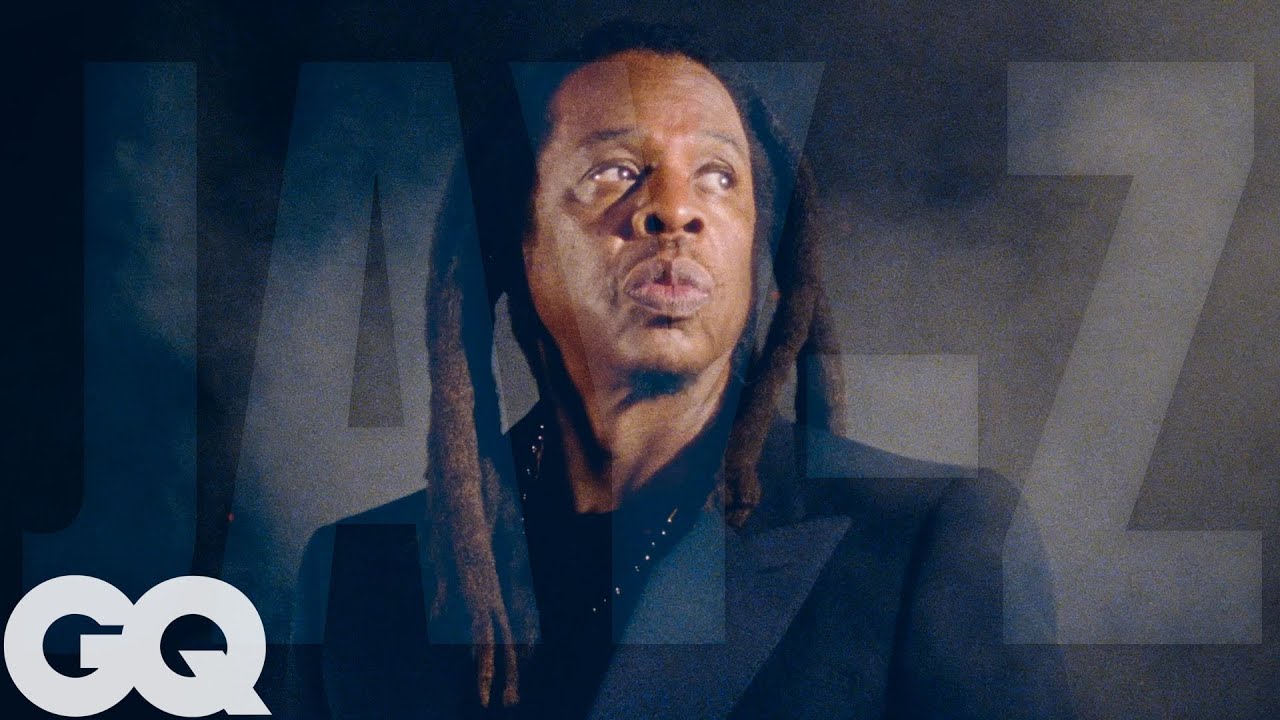
Jay-Z speaks to GQ in rare exclusive interview
In his first major sit-down in years, Shawn Carter opens up about the lawsuit that nearly broke him, the code he lives by, what he owes the culture, and why he still has more floors to climb.
A Different Jay-Z Walks Into the Room
Something is different. If you have followed Jay-Z through twenty-plus years of interviews, you already know the version of him that usually shows up: deliberate, measured, careful with words in a way that sometimes reads as guarded. He answers questions like a man who knows every sentence he says will be taken apart. He has always been brilliant in those rooms, but you could feel the control.
This time, in a pair of conversations with GQ published in March 2026, the control is still there but the guard is down in a way it rarely has been. He is fluid. He finishes thoughts all the way through. He laughs. He says things like “I’m fucking Jay-Z, respectfully” and it does not land as bravado; it lands as clarity. This is a man who has walked through something and come out on the other side of it still knowing who he is. The interview itself becomes the first public move of what he describes as a year of offense after a year spent on defense – the next, headlining the 2026 Roots Picnic.
Credit belongs to the interviewer, Frazier Tharpe, for the quality of preparation he brought into that room. This was not a sit-down where the journalist showed up with a list of generic questions about business ventures and net worth. Frazier came armed with the catalog. Nearly every major topic Jay-Z touched on in the conversation had a lyric waiting for it. When Jay talked about his view that money does not define a person’s character, Frazier brought back the line from “Public Service Announcement” on The Black Album: “Man, you was who you was before you got here.” When Jay talked about always seeing the win even in losses, Frazier recalled a Kanye quote about that exact quality. When Jay described the feeling of naively walking through a room full of dangers you could not see, Frazier connected it back to the independent spirit Jay has described since the beginning of his career. The callbacks were not decorative. They were load-bearing. They proved that Frazier had done something most interviewers do not bother to do with artists of this stature: he listened to the music first and took it seriously as documentation.
That preparation paid off in a specific way. It confirmed something Jay-Z’s closest collaborators and the people who study his work have said for years: the man puts everything in the music. His philosophy on wealth, his street code, his views on loyalty, his relationship with failure, his understanding of how systems work against certain people, none of it appeared in this interview for the first time. It was already on record, verse by verse, across three decades of albums. What the interview did was give those ideas a face and a context. The music was the primary text all along. Frazier’s lyric callbacks made that undeniable.
That is the frame he puts around 2025. And if you want to understand where he is going, you have to understand exactly what he was defending against.
The Legal Battle
The Buzbee Lawsuit: What Actually Happened
In October 2024, Houston attorney Tony Buzbee was making national headlines representing dozens of plaintiffs in civil suits against Sean “Diddy” Combs. In November 2024, Buzbee sent Jay-Z’s lawyers two demand letters, accusing the rapper of raping two minors decades ago. Those letters gave Jay-Z a choice: attend a confidential mediation session or face a public lawsuit.
Jay-Z declined. The complaint, filed in federal court in New York, claimed that both Combs and Jay-Z had sexually assaulted a 13-year-old girl at an MTV Video Music Awards afterparty in 2000. Both men denied the allegations.
The plaintiff voluntarily dismissed the lawsuit with prejudice in February 2025, through her attorney. A dismissal with prejudice means the same complaint cannot be refiled. Jay-Z called it a victory through a Roc Nation statement. He then went further. He filed a defamation lawsuit in Alabama, where the woman lives, accusing her and Buzbee of an “evil conspiracy” to extort him with what his team called completely fabricated claims. His lawyers alleged Buzbee had coached the plaintiff into naming Carter despite the woman having no actual claim against him.
Buzbee Case Timeline
- Oct 2024 Buzbee files original lawsuit vs. Combs
- Nov 2024 Demand letters sent to Jay-Z’s lawyers
- Dec 2024 Jay-Z added to civil complaint
- Feb 2025 Plaintiff voluntarily dismisses with prejudice
- Mar 2025 Jay-Z files defamation suit against Jane Doe and Buzbee
- Jul 2025 Judge dismisses Jay-Z’s defamation suit vs. Buzbee on First Amendment grounds
- Mar 2026 Alabama defamation case ongoing
In July 2025, Los Angeles Superior Court Judge Mark Epstein dismissed Jay-Z’s extortion and defamation suit against Buzbee on First Amendment grounds, ruling in a 65-page decision that the demand letters did not legally qualify as extortion because they only threatened a lawsuit, not broader harm. The judge was notably conflicted. Epstein said in his ruling that he would have decided differently if a key piece of evidence had been admitted: a recorded conversation in which the plaintiff appeared to admit Carter had never assaulted her, and in which she suggested Buzbee had pressed her to include him as a defendant. But the judge ruled that evidence inadmissible. The Alabama defamation case remains ongoing as of March 2026.
This is what Jay-Z carried into 2025. Not a rumor. Not a controversy. A lawsuit alleging one of the most serious crimes a person can be accused of, filed at the height of the Combs scandal when public opinion was already raw, timed to do maximum damage. He was not exaggerating when he said it nearly broke him.
I haven’t been that angry in a long time. Uncontrollable anger. Like, you don’t put that on someone. That’s the thing that you better be super sure about.
Jay-Z, GQ 2026
The Code
No Women, No Kids: The Code and Its Contradictions
Jay-Z’s response to the lawsuit was framed in the language of the street. He talked about the code he carried out of Marcy into the music industry: no women, no kids. He said these were rules he took seriously, lines that existed even in the worst of times. The anger he felt about the lawsuit was rooted, he said, in the specific nature of what was being alleged. You do not put that on a person. You better be sure.
It is a principled position. It is also one that invites scrutiny from anyone who has been paying attention to Jay-Z’s catalog over the decades.
On “Super Ugly,” his 2001 response record during the beef with Nas, Jay-Z rapped about leaving condoms on Nas’s baby seat. It is one of the most notorious lines in the history of rap beef, a line so personal and so pointed at a child’s mother that even Jay-Z himself later admitted it went too far. He reportedly apologized to Nas’s mother for it. The line crossed the very code he invokes in this interview. It involved a child. It involved a woman. He knew it at the time, and he said so.
This does not make his current position dishonest. People grow. The Jay-Z sitting across from GQ in 2026 is not the Jay-Z who wrote that verse in 2001. But the tension is worth naming because he names the code so firmly. The strength of his current position is tied to the fact that he has lived long enough to understand the weight of what he is talking about. The “Super Ugly” verse is evidence that the code was not always followed, and that knowledge is built in scar tissue, not theory.
Growth is not the erasure of old decisions. It is the accumulation of them.
Mental Reconstruction
Playing Defense, Preparing Offense
Jay-Z has always processed pain through music. That was the pattern. Something heavy happens, it goes into the work, the work absorbs it, and he moves forward. He did it on “4:44.” He has done it across his career in ways that turned personal crisis into public art. But this time, he says, that path was not available to him.
The scratch ideas he made during this period, the impulse recordings, he describes them plainly: they were all bad. Too angry. Too raw. Not something he wanted to release. And so for maybe the first time in his adult life, he had to sit in a feeling without putting it somewhere. He had to lean on the people around him instead of the music.
What comes through in the interview is that the circle held. He called a partner at LV Nation before the lawsuit became public. He told his wife it was not in his DNA to settle. He described refusing a settlement not as a financial calculation but as a moral one. He said taking the settlement would have killed something in him. The money would have been cheaper. It would have been faster. He could not do it.
When asked whether he has fully come back from it emotionally, he does not perform recovery. He says he is still working through it. That honesty is more striking than any polished answer would have been.
We played enough defense. 2026 is all offense.
Jay-Z, GQ 2026
Cultural Power
The Halftime Show: Every Act Has Been POC
In 2019, the NFL was in a credibility crisis. Stars like Pink and Cardi B were declining the halftime show. The league had taken a hit from the Colin Kaepernick situation and was seen by many younger fans as out of step with culture. The halftime show had been limping along on legacy bookings. Maroon 5 performed in February 2019 and the reception was poor. The NFL needed a reset.
The NFL partnered with Jay-Z and Roc Nation in 2019, aiming to better align the league with cultural movements and regain trust, particularly from the African American community. Jay-Z reportedly told the league he did not like how they chose performers: the process of auditioning multiple acts and then picking one left too many alienated artists in its wake. He wanted a cleaner, more intentional approach.
Roc Nation Super Bowl Headliners
- 2020 Shakira & Jennifer Lopez (ft. Bad Bunny, J Balvin)
- 2021 The Weeknd
- 2022 Dr. Dre, Snoop, Eminem, Mary J. Blige, Kendrick, 50 Cent
- 2023 Rihanna
- 2024 Usher
- 2025 Kendrick Lamar
- 2026 Bad Bunny (first solo Spanish-language headliner)
What followed is not a matter of opinion; it is a matter of record. Since Jay-Z and Roc Nation took over the Super Bowl halftime slot, every headliner has been a person of color and the bookings have been primarily hip-hop and R&B centric, including Shakira, J.Lo, The Weeknd, Dr. Dre and his all-star lineup, Rihanna, Usher, Kendrick Lamar, and most recently Bad Bunny. Bad Bunny’s selection for Super Bowl LX in 2026 made him the first solo Spanish-language artist to headline the event.
Before Roc Nation’s involvement, the halftime show had been dominated for years by legacy rock and pop acts, with hip-hop appearing mostly in supporting roles. Jay-Z did not just book artists. He rewrote what the biggest entertainment moment in American sports looks like and who it belongs to. Seven consecutive headliners. Seven people of color. Seven times the most-watched live event in the country opened its biggest slot to voices that had historically been kept at the edges of it.
When Jay-Z says in this interview that he chose Kendrick Lamar because he was having a monster year and not because of any alliance in a rap beef, he is telling the truth. The statistical pattern of his choices reflects something larger: a deliberate, consistent expansion of what gets centered. He did not do it once. He has done it seven times in a row.
For a long time, America looked at rap as this fad thing. It’s the number one genre in the world. I would love for these platforms to be more inclusive of our music.
Jay-Z on the Roc Nation NFL partnership
Hip Hop Culture
Kendrick vs. Drake: Jay-Z’s Complicated Verdict on Rap Beef
The question about the 2024 Kendrick Lamar and Drake back-and-forth was always going to come up. Jay-Z was positioned in the middle of it whether he wanted to be or not: he runs the company that put Kendrick on the Super Bowl stage, and Drake’s supporters spent a portion of 2024 treating that booking as evidence of a conspiracy. So what does he actually think?
His answer is not what most people expected. He does not celebrate the beef. He does not pick a winner. He traces the four original pillars of hip-hop culture: breaking, graffiti, DJing, and battling. Then he goes through each one and describes what happened to it. Breaking became an Olympic sport. Graffiti moved into gallery walls. DJing faded from the front of the stage. And battling, the last one standing, is the one he says he is most conflicted about in the social media era.
The music that came out of the Kendrick and Drake exchange was extraordinary. Jay-Z acknowledges that without hesitation. But he says the collateral damage of what surrounds beef today is something the genre may not be able to absorb. People who like Kendrick now hate Drake reflexively, regardless of what he makes. The fan armies do not put the weapons down when the music stops. They keep fighting on social media every day, trying to wreck people’s marriages, damage their relationships with their children, tear apart lives in ways that have nothing to do with the art.
He says something that takes real courage to say publicly: he does not know if battling needs to remain part of hip-hop culture anymore. He hates that he has this view. He says so directly. He knows what it sounds like coming from him. But he believes that without social media, beef could stand on its own terms. With it, the fallout goes places the artists never intended and does damage that outlasts the songs by years.
This is worth sitting with, given who is saying it. Jay-Z and Nas had one of the most celebrated battles in the genre’s history. “Ether” and “The Takeover” are taught as masterclasses. He does not disown that. He points out that their beef had been building for years before it arrived at Summer Jam, and that he genuinely regrets the escalation because he actually likes Nas as a person. The beef had a context and an endpoint. Today, he is not sure those conditions exist anymore.
A Dissent
Hov Doesn’t Get to Decide What the Culture Keeps
With full respect to one of the greatest to ever do it: no. Jay-Z is wrong here, on multiple counts, and the fact that he is Jay-Z does not make him less wrong. It might actually make him more wrong, because the weight of his name gives these opinions the texture of verdicts when they are really just one man’s read on things he has moved away from.
Start with breaking. Jay-Z says it became an Olympic sport and leaves it there, as if inclusion in the Olympics is the same as death. B-boy and b-girl culture is not dead. It is not even close to dead. Crews are active on every continent. Red Bull BC One draws tens of thousands of people every year. The Bronx still produces breakers. Seoul produces breakers. Tokyo produces breakers. Paris produced a breaking competition at the 2024 Olympics that introduced the art form to hundreds of millions of viewers who had never seen it at that level. You can argue about whether Olympic inclusion commodified or appropriated breaking, that is a fair conversation. But saying breaking is no longer part of the culture because it ended up in the Olympics is like saying jazz stopped being Black music because it ended up in conservatories. The roots do not move just because the branches grew somewhere unexpected.
The graffiti point does not hold either. Jay-Z says it moved into galleries, into Keith Haring and Basquiat, and therefore it is no longer part of hip-hop. But writers did not stop writing when Basquiat crossed over. The trains stopped running with pieces on them and writers moved to walls, to freights, to legal walls, to commissioned murals, to buildings in cities all over the world. The graffiti community is enormous, global, and deeply self-aware about its relationship to hip-hop origins. The fact that some work ended up in auction houses does not erase the thousands of writers who have nothing to do with galleries and never will. Suggesting otherwise reveals a view of the culture that stopped paying attention somewhere around 1994.
On DJing: the DJ is not at the front of the stage for most rap acts, true. But to say DJing no longer exists as a pillar because you cannot name Drake’s DJ is a thin argument. DJ culture is thriving in ways that have nothing to do with standing beside a rapper. The DJ scene, from Afrobeats sets to house music to battle DJs to mixtape culture to the turntablist competitions, like DMC, that still run every year, is not gone. It just does not need Jay-Z’s touring setup to validate itself.
The battling point is the most loaded one and deserves the most direct response. Jay-Z says he does not know if battling needs to be part of the culture anymore. He hates that he has the view, he says. He should. Because no one gave him, or anyone else, the authority to retire a founding element of an art form that belongs to millions of people across generations and geographies. The culture is not a corporation with a board that votes elements out. It is not a brand that gets to discontinue a product line. Hip-hop does not answer to its most successful alumni any more than the blues answered to the artists who got rich from it.
The concern Jay-Z is raising about social media toxicity around beef is real and worth taking seriously. Fan armies are genuinely destructive. The way beef bleeds into harassment campaigns targeting children and partners is worth criticizing. Those are legitimate points about the current conditions surrounding rap conflict. But the answer to toxic fandom is not to suggest that one of the original pillars of the culture should be retired. That conflates the art form with the behavior of the audience, and it lets the audience’s worst impulses dictate what artists are allowed to do with their craft.
Jay-Z built his entire career in part on the competitive fire that battling culture produces. “The Takeover” exists because of that tradition. “Blueprint” exists because of that tradition. His hunger to prove himself to every label that rejected him, the same hunger he describes in this very interview, is the same energy that battling codified and celebrated. You do not get to be shaped by something, profit from it, become the greatest to ever do it inside that tradition, and then suggest the tradition should go away because it got messy. As a vet and someone who has a different vantage point, he can identify what he sees and his opinion for sure but not redact it like a line item on a balance sheet.
Yes, he is Hov. He is the first billionaire in hip-hop history. He has earned the right to his opinion on everything. But the culture was here before him and it will determine its own shape after all of us are gone. That is not disrespect. That is exactly the spirit he claims to represent.
Family
Blue Ivy Fought for It. That Made All the Difference.
The warmest stretch of the interview comes when Jay-Z talks about his daughter Blue Ivy on Beyonce’s most recent tour. He is specific in a way that only a parent who was truly present would be. He talks about the difference between Blue Ivy going through the motions in her first performance and what he saw this time: a kid who fought for something.
There is something instructive in how Jay-Z talks about this. He connects Blue Ivy’s refusal of a formal teacher to his own instinct for independence. He connects her fighting for stage time to the hunger he describes in himself as a young man going to every record label and being turned away. The children of greatness either inherit it or they do not. Blue Ivy appears to be building her own version of it, on her own terms, which is probably the best outcome a parent in that position could hope for.
Wealth and Morality
The Billionaire Question: Jay-Z on Money, Morality, and the DuPonts
On his song “Grammy Family Freestyle,” Jay-Z raps: “In the race to a billion got my face to the ceiling Got my knees on the floor, please Lord forgive him Has he lost his religion, is the greed gon’ get him? He’s having heaven on earth, will his wings still fit him?” The interviewer brings it back to him and asks whether the question still applies. The answer he gives is one of the clearest articulations of his philosophy on wealth that he has ever offered in a public conversation.
He says morality is not a dollar amount. He asks at what figure exactly a person becomes corrupted by success. Is it $100,000? Is it $1 million? If there is a cutoff, what happens at $999,000? The framing exposes the absurdity of the argument that wealth itself is a moral failing. He says he did not get to where he is by taking advantage of people, by exploiting loopholes, or by extracting from systems. His talent, he argues, is what pushed against every headwind that was placed in front of him.
He draws the line between the DuPonts and the Carnegies, old money built on structures of extraction and inherited power, and what he represents, which is talent monetized in a system that was not designed for him to win in it at all. He is a realist, he says, not an idealist. He sees the world as it is, not as he wishes it were. And in the world as it is, the system exists, it is not going away, and operating within it while maintaining your integrity is not the same as endorsing it.
When pushed on what he thinks about people who say no one should have a billion dollars, his answer is three words: he does not care. Not dismissively. Philosophically. He cannot control what people believe and he does not try to. Who you are is who you were before you got the money. The money does not make you.
“No matter where you go, you are what you are, player
Jay-z on “public service announcement” off the black album
You can try to change, but that’s just the top layer
Man, you was who you was when you got here”
What Comes Next
The Next Album: Timeless Over Trendy
Jay-Z does not have a new album ready. He says this plainly. The scratch ideas he made during the lawsuit period were all bad, his word, because they were all made from a place of fire and anger. He does not know yet what he needs to make. What he does know is what he will not do.
He will not try to sound young. He will not chase slang that is not his. He will not attempt to recreate the feeling of 1996, because that would be embarrassing and inauthentic. He is not 26 anymore. Making music that approaches that era, aesthetically or sonically, would be a lie, and he does not make lies.
What he describes instead is a desire to make something timeless. Something honest. Something that reflects who he is at 56, not who the internet wants him to be, not what would generate the most immediate reaction. He thinks artists get jammed up trying to recreate the white-hot feeling of when everything was new. That feeling is not reproducible. Trying to recreate it is where careers go sideways.
“4:44” is the reference point he keeps returning to. He calls it the album he was always afraid to make, the one where the superman mythology came down and the real interior thoughts went on record. He still cannot listen to it because of how exposed it feels. But he is proud of it. And it is clear that whatever comes next will need to reach for that same level of truth, or he will not put it out.
I’m just going to make something timeless that I really love and that’s really honest and true to who I am.
Jay-Z, GQ 2026
Legacy
The Highest Floor: From Staying in the Building to Owning It
Toward the end of the interview, the conversation arrives at a story Jay-Z has told before: the Russian oligarch, the hotel, the floor he thought was the top floor, and the revelation that there was a higher floor above it where the other man was staying. The lesson he took from it was that there is always another level above the one you think is the ceiling.
He has updated the metaphor. He has been sitting with it. The highest floor in the building is not the endpoint anymore, he says. The next step is owning the building. You are not a guest at the top. You own the structure.
This is not a boast. It is a philosophy. Stay childlike. Stay curious. There will always be another level if you remain open to seeing it. The people who plateau are the ones who decide they have arrived. Jay-Z at 56, after the lawsuits, after the loss, after a year of uncontrollable anger and healing that is still in progress, after watching his daughter fight her way onto a stage, after seven consecutive Super Bowl halftime shows that rewrote what that slot looks like, is still looking up.
He has not arrived. He is in motion. That is the whole message of this interview, and it is probably the clearest thing he has said publicly in years. This is not a comeback narrative. There is no comeback when you never left. This is a man who took a hit, stood in it without flinching, refused to pay his way out of it, and is now stepping back into the open with his hands up.
Not defensively. Offensively. On his own terms. As always.


4 thoughts on “Jay-Z: 2026 Is All Offense”