
Too $hort’s 23-Album Case for Hip Hop Longevity
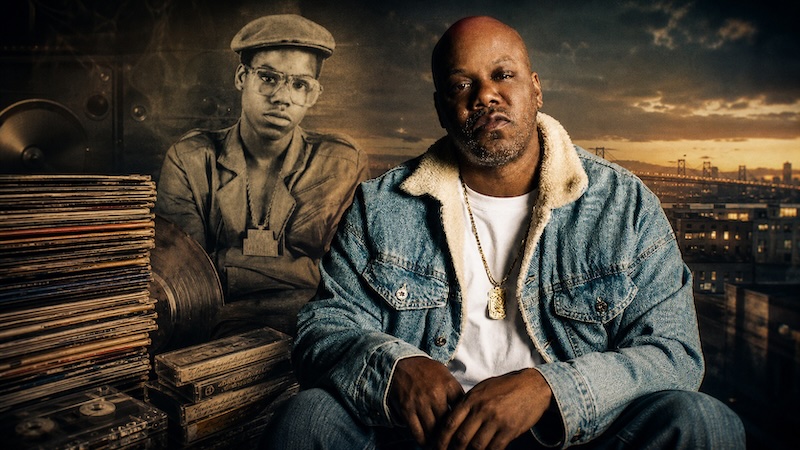
Too $hort has spent most of his career outrunning one stubborn rap industry idea: the belief that age should push artists to the side. His new album, Sir Too $hort Vol. 2: Drink & Smoke, arrived on July 31, 2026, two decades after “Blow the Whistle,” and it gives that argument a fresh form. Too $hort is still recording, still touring, and still presenting himself as an active worker in Hip Hop, not a legacy act making occasional appearances for old fans.
Unfortunately, Hip Hop still struggles with longevity. Other Black music traditions built space for older artists to keep growing in public. Rap, by contrast, has often treated age as a problem to solve or a punch line to throw. In his July 30 interview with The Associated Press, Too $hort pushed back on that logic in plain terms. He described Hip Hop moving into what he called a “senior citizen era,” and he framed his own output as part of a larger path for artists who keep going after youth no longer defines their market position. His point was practical. If the audience stays, the work stays, and the business stays, the career does not need an arbitrary end date.
A Career Built Before the Gatekeepers Agreed
Too $hort has unusual authority on this subject because his career did not begin with institutional approval. He is an Oakland pioneer who was still selling homemade tapes on Bay Area streets more than four decades before this new album. That hand-to-hand tape economy was at the center of his rise. His early local circulation helped establish Oakland as one of rap’s formative regional centers. That origin story explains why longevity for Too $hort has never depended on staying inside one narrow commercial lane.

Early independence in rap often gets turned into branding language, stripped of its material side. In Too $hort’s case, it meant direct contact with listeners, a local scene strong enough to move tapes, and a habit of treating music as labor rather than spectacle. In an AP interview, he recalled being a teenager focused on house parties, school dances, and selling tapes in the street. He also said that once he got his foot in the door, he understood Hip Hop as his job. Twenty-three studio albums do not come from a career built on prestige alone. They come from repetition, audience maintenance, and a willingness to keep producing when trend cycles move elsewhere.
What the New Album Proves
Sir Too $hort Vol. 2: Drink & Smoke is not being sold as a reinvention. That is part of the point. The new album was produced entirely by Lil Jon, a partner whose chemistry with Too $hort has already survived major changes in rap production, radio formats, club music, and digital distribution. The release timing ties it to the 20th anniversary of “Blow the Whistle,” which gives listeners an easy nostalgia hook. Yet the more useful reading is structural. Too $hort is showing what it looks like when an older rapper keeps making records without pretending to be newly born every album cycle.
The available platform listings support the scale of the release. Spotify lists the album as a 13-track project from 2026, and Apple Music shows it as a July 31, 2026 release. Those facts confirm this is not a loose single or commemorative drop. It is a full album, positioned as current work. Too $hort also tied the project to grief and continuity by discussing Lil Jon’s late son, DJ Young Slade, whose production work remained part of the sessions. That gives the record a second layer. It is not only an aging artist insisting on his place. It is also a record about lineage, memory, collaboration, and loss.
Longevity Is Also an Economic Question
When people talk about older rappers, the conversation often drifts into taste. Does the music still sound current. Does the artist still connect with younger listeners. Those questions matter, though they miss the larger issue. Longevity in Hip Hop is also an economic question. Too $hort’s survival tells us as much about business habits as musical relevance.
His early tape-selling years trained him in audience behavior before streaming dashboards and social metrics. He came up in a regional market where artists learned how to move product, stay visible, and build loyalty without waiting for national validation. That history does not transfer neatly to 2026. The Bay Area infrastructure of the 1980s and early 1990s cannot be copied by every independent rapper working under streaming conditions. Still, the habits behind it remain useful: know your listeners, treat your catalog as an asset, keep your name active in live settings, and avoid tying your entire future to one hit.
Too $hort’s own comments point in that direction. He does not talk like an artist chasing one last moment. He talks like someone who never stopped working. That stance cuts against the industry habit of measuring veteran rappers against their youngest selves. It also offers a clearer model for independent artists. A long career does not depend on looking frozen in a breakthrough year. It depends on keeping the relationship between songs, shows, collaborators, and audience alive long enough for each phase to support the next one.
What Hip Hop Still Has to Learn From Veterans
Rap has become more comfortable honoring its history, but honor is not the same as structural support. Anniversary tours, tribute slots, and social media praise do not solve the deeper issue. The culture still needs a stronger framework for older artists as active creators, especially those whose work helped build regional scenes and independent business models in the first place.
Too $hort’s case shows why. He is not surviving as a museum piece. He is using new albums to argue for a wider definition of rap adulthood. Peers like E-40, Jay-Z, and Fat Joe as examples of artists continuing past the age limits people once treated as fixed. That comparison points to a collective shift, not a solo exception. Hip Hop is old enough now to have elders with full catalogs, touring histories, business stakes, and multigenerational audiences. The question is whether the industry will build around that fact or keep acting surprised each time a veteran artist releases strong new work.
There is also a cultural lesson in the sound of continuity itself. Too $hort has never depended on technical reinvention as proof of worth. His career has been built on voice, rhythm, regional identity, and a direct relationship with the listener. Those traits age differently than hype. They allow an artist to carry history into the present without sounding trapped in it. That does not mean every veteran rapper should follow his template. It does mean the culture has more room for mature careers than the market often admits.
The Strongest Argument Is the Work
Too $hort’s new album will not settle every argument about aging in rap. It does something more useful. It gives the debate a present-tense case study rooted in labor, catalog discipline, and independent habits formed long before streaming. His 23-album run is not proof that time stands still. It is proof that Hip Hop careers do not need to expire on schedule.
That is the real story inside Sir Too $hort Vol. 2: Drink & Smoke. The album is news because it marks another release from a West Coast figure with deep historical weight. It is also analysis material because it forces a harder look at how rap measures value. Too often, the culture celebrates youth as if growth weakens the form. Too $hort’s career argues the opposite. Hip Hop does not lose force when its veterans remain present. It gains memory, business clarity, and a broader sense of what artistic life can look like after the first peak.







3 thoughts on “Too $hort’s 23-Album Case for Hip Hop Longevity”