
Afrika Bambaataa (1957–2026)
The Man Who Built Hip Hop and the Wreckage He Left Behind
Afrika Bambaataa died early on the morning of April 9, 2026. Peacefully, according to those close to him. No struggle. He simply fell asleep and did not wake up.
Afrika Bambaataa — born Lance Taylor in the South Bronx on April 17, 1957 — was 67 years old. His cause of death was cancer. His close friend and Zulu Nation member Mick Benzo shared on social media that he had spoken with Bambaataa two days before his passing and found him “in high spirits.” Eight days short of his 68th birthday, one of the most important and most damaging figures in Hip Hop history was gone.
The tributes and the reckoning arrived at the same time. That tells you everything you need to know. The news of Afrika Bambaataa’s death quickly spread across major outlets, as fans and critics alike began revisiting the full scope of his legacy in hip hop.

From the Bronx River Projects to the Block Party
Before there was Hip Hop as a global culture, there was a teenager named Lance Taylor growing up in the Bronx River Projects, one of the roughest housing developments in New York City. His mother and uncle were activists. His neighborhood was war.
By his teens, Taylor had risen through the ranks of the Black Spades, one of the most feared street gangs in the Bronx. He was not a peripheral member. He was a commander. The skills he developed in that world — organizing people, commanding loyalty, reading a room — would become the foundation of everything he built later.
The turning point came when Taylor won an essay contest and was sent on a trip to Africa. He came back changed. He had seen the 1964 film Zulu, a movie about the Zulu nation standing against British colonizers, and something in that image of collective resistance hit differently after visiting the continent itself. He took the name Afrika Bambaataa Aasim, adopting it from the Zulu chief Bhambatha, who led an armed rebellion against economic oppression in early 20th-century South Africa. He told people the name meant “affectionate leader” in Zulu.
Then he redirected everything the streets had taught him toward something else entirely.
Peace, Unity, Love, and Having Fun
By the early 1970s, Bambaataa was throwing block parties throughout the South Bronx. He invited rival gang members. He built the Bronx River Organization, which eventually became the Universal Zulu Nation — an alternative to gang life built on four pillars: peace, unity, love, and having fun.
He was not the only one doing this. DJ Kool Herc is widely credited as the father of Hip Hop for his innovation of the breakbeat, isolating and looping the percussion breaks in funk and soul records to keep the dancers going. Grandmaster Flash refined the turntable technique, developing skills that made DJing its own art form. These three men form the holy trinity of Hip Hop’s origins.
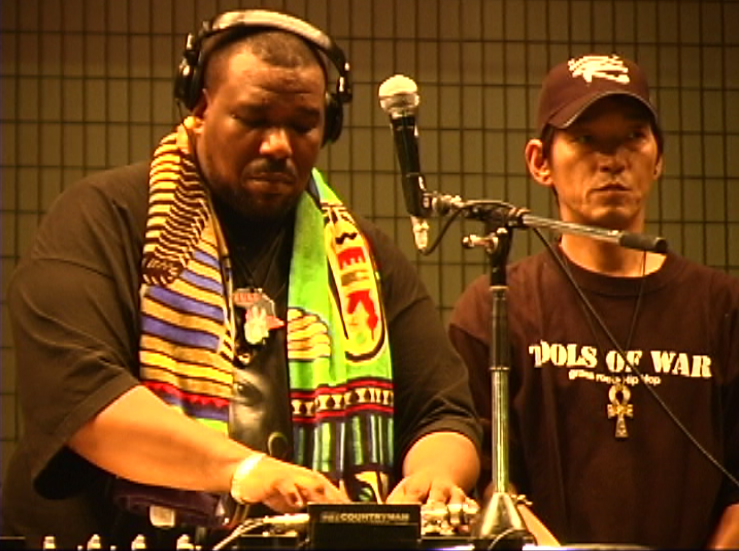
But Bambaataa brought something different from either of them. He brought a worldview. Where Herc had a sound and Flash had technique, Bambaataa had a philosophy. He saw Hip Hop not as a genre but as a movement. He saw it as a way to pull young people out of gang life and into something that had purpose. He organized it. He gave it structure. He gave it a name.
The Universal Zulu Nation had an official birth date of November 12, 1977, making it the first formal Hip Hop organization in history. It grew from a Bronx collective into an international body that spread Hip Hop culture to cities and countries that had never heard a breakbeat. The idea that Hip Hop was built on peace and community empowerment — that is Bambaataa’s invention. Without him, Hip Hop may have remained a local sound. He made it a global language.
Planet Rock: The Song That Changed Everything
If the Zulu Nation was Bambaataa’s organizational legacy, then “Planet Rock” was his sonic one.
Released in 1982 under the name Afrika Bambaataa and the Soulsonic Force, “Planet Rock” was produced with Arthur Baker and keyboardist John Robie. The record drew on Kraftwerk’s “Trans-Europe Express” and “Numbers” — German electronic compositions built around synthesizers and drum machines — and fused them with a Roland TR-808 beat and rapped vocals. Nothing like it had ever been heard before.
Baker recalled the moment he realized the idea would work. He heard Kraftwerk’s “Numbers” being played at a club in Brooklyn and watched Black men in their twenties and thirties asking, “What’s that beat?” He knew then that if you took that electronic pulse and added the energy of the street, something new would be born.
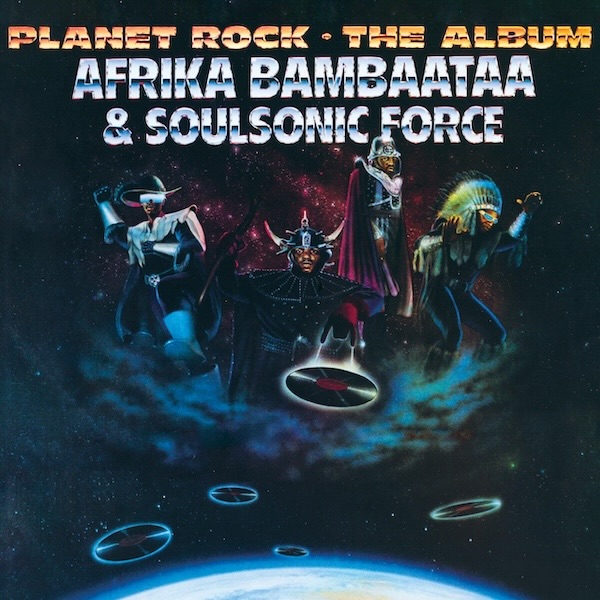
He was right. “Planet Rock” reached number four on the U.S. R&B charts. It went gold. It became one of the most sampled records in music history. Rolling Stone later ranked it the third greatest Hip Hop song of all time. Detroit techno pioneer Juan Atkins cited it as a direct influence on his sound. The influence of “Planet Rock” can be heard in G-funk, in house music, in the work of producers like Timbaland and The Neptunes decades later.
The Roland TR-808 drum machine — which Bambaataa and Baker placed at the center of that record — became the defining rhythmic tool of an era. One music historian described it as “the Big Bang of pop’s great age of disruption.” That is not an overstatement. Its influence on Hip Hop, R&B, and electronic music cannot be measured. Every 808 kick you hear today in a Kanye West record, a Travis Scott album, or a regional rap track traces a direct line back to what happened in an Upper East Side studio in New York in 1982.
“Planet Rock” was also the first Hip Hop record to truly absorb European electronic music and make it into something distinctly Black and distinctly American. Bambaataa proved that Hip Hop had no borders. It could take anything — German synthesizers, Japanese electronic bands, rock, funk, salsa — and transform it into something new. That idea became the engine of the entire culture.
Building the Blueprint
The years after “Planet Rock” saw Bambaataa continue to push Hip Hop into territory no one had mapped. He linked with Sex Pistols vocalist John Lydon for “Time Zone” in 1984, fusing rap with punk rock before anyone else had figured out the formula. In 1988, he joined the Stop the Violence Movement, contributing to the gold-certified “Self Destruction,” which raised $400,000 for the National Urban League. In 1990, he organized a concert at Wembley Stadium in London to honor Nelson Mandela’s release from prison, introducing both Mandela and the African National Congress to Hip Hop audiences worldwide.
His archive — vinyl, original recordings, manuscripts, books, papers — arrived at Cornell University’s Hip Hop Collection in December 2013, where it became part of the largest collection of historical Hip Hop material in North America. In 2012, Cornell gave him a three-year appointment as a visiting scholar.
Every artist who came after Bambaataa exists in a world he helped shape. Run-DMC. Public Enemy. N.W.A. Wu-Tang Clan. Kanye West. Kendrick Lamar. The line from the Bronx block parties of the 1970s to the stadiums and streaming platforms of today runs directly through the work Bambaataa did.
The Accusations, the Lawsuit, and What the Community Knew
There is no way to write honestly about Afrika Bambaataa without sitting with this section for a long time.
In May 2016, Bronx political activist Ronald Savage publicly accused Bambaataa of molesting him in 1980, when Savage was 15 years old. Three more men came forward with similar accusations within that same month. The Universal Zulu Nation, the organization Bambaataa had founded and led for decades, disassociated itself from him as part of what they described as an organizational restructuring to remove “all accused parties and those accused of covering up the current allegations of child molestation.” Bambaataa resigned as head of the Zulu Nation on May 6, 2016.
He denied the allegations. He called them “baseless” and “a cowardly attempt to tarnish my reputation and legacy in Hip Hop.”
The legal consequences arrived slowly. A civil suit filed by a plaintiff identified as John Doe alleged that Bambaataa sexually abused him beginning at age 12, from 1991 to 1995, and that he was also trafficked to other adult men. Bambaataa did not appear in court for the proceedings. In May 2025, he lost the case by default judgment. Because he did not appear in court, no formal defense or cross-examination of the claims ever took place. He was required to pay a settlement to the plaintiff.
Hassan Campbell, one of the other accusers, reacted publicly to the news of Bambaataa’s death on April 9, 2026. His response was not one of mourning.
Here is what is most important to understand about the abuse allegations: reporting suggests that rumors about Bambaataa’s conduct with minors had circulated within the Zulu Nation and the broader Hip Hop community for years — possibly decades — before any public accusations were made. People knew, or heard things, and said nothing. That silence was not neutral. It allowed the alleged abuse to continue and go unpunished for a very long time. The institution Bambaataa built, the one that was supposed to protect and uplift young people, became the environment in which the harm occurred and the environment in which it was covered up.
That is not a footnote to his legacy. It is part of the story.
How Do We Hold This?
The Hip Hop Alliance, chaired by Kurtis Blow, issued a carefully worded statement on April 9, 2026. They called Bambaataa “a foundational architect of Hip Hop culture” and acknowledged that his legacy is “complex” and “has been the subject of serious conversations within our community.”
That word — complex — does a lot of work in situations like this. It is sometimes used to avoid saying something directly. In this case, what needs to be said directly is this: the man who built the philosophy of Hip Hop as a force for peace, unity, and the protection of young people from violence was also, by the weight of civil court judgment and multiple accusers, a man who preyed on children. He was not a distant, absent figure from the community he harmed. He was its center. Its leader. The person young people were brought to.
Some people in the culture will spend the days ahead separating the art from the artist. Some will refuse to do that. Both responses are understandable. Neither response erases the other.
The music is real. “Planet Rock” changed the world. The Zulu Nation created a model for Hip Hop as community uplift that spread to every corner of the globe. Afrika Bambaataa gave Hip Hop its name in the posters he put up around New York, posters that eventually made their way across the country and introduced millions of people to the culture.
The harm is also real. The children who were abused did not get a choice in the matter. They did not get to separate anything. They lived with what happened to them while the man responsible was celebrated.
Both of these things are true at the same time. A Hip Hop journalist’s job is not to resolve that tension or to hand you a clean conclusion. The job is to name what happened, all of it, and let you sit with the full weight of it.
What Remains
Afrika Bambaataa died on April 9, 2026. He was 67 years old. His passing was reported by Mick Benzo, confirmed by TMZ, and covered within hours by Rolling Stone, Billboard, Variety, Deadline, The Guardian, and USA Today. The speed and reach of that coverage is itself a measure of how much ground he covered in his lifetime.
He was born Lance Taylor in the Bronx. He became one of the three founders of Hip Hop. He wrote a record that changed the course of music history. He built an organization that took Hip Hop to the world. He also, by the accounts of multiple men who came forward at great personal cost, abused children who were entrusted to his care, and an institution he led knew about it and stayed quiet.
Hip Hop has always been a culture that deals in truth. That is what the pioneers said it was built on. The truth about Afrika Bambaataa is that he contains all of this. The block parties and the abuse. The Roland TR-808 and the silence of those who should have spoken. The Zulu Nation’s founding ideals and the way those ideals were used as cover.
You do not have to celebrate that. You do not have to pretend the music does not matter. What you do owe — to the culture, to the accusers, to yourself — is honesty about the whole picture.
That is all this is. The whole picture.
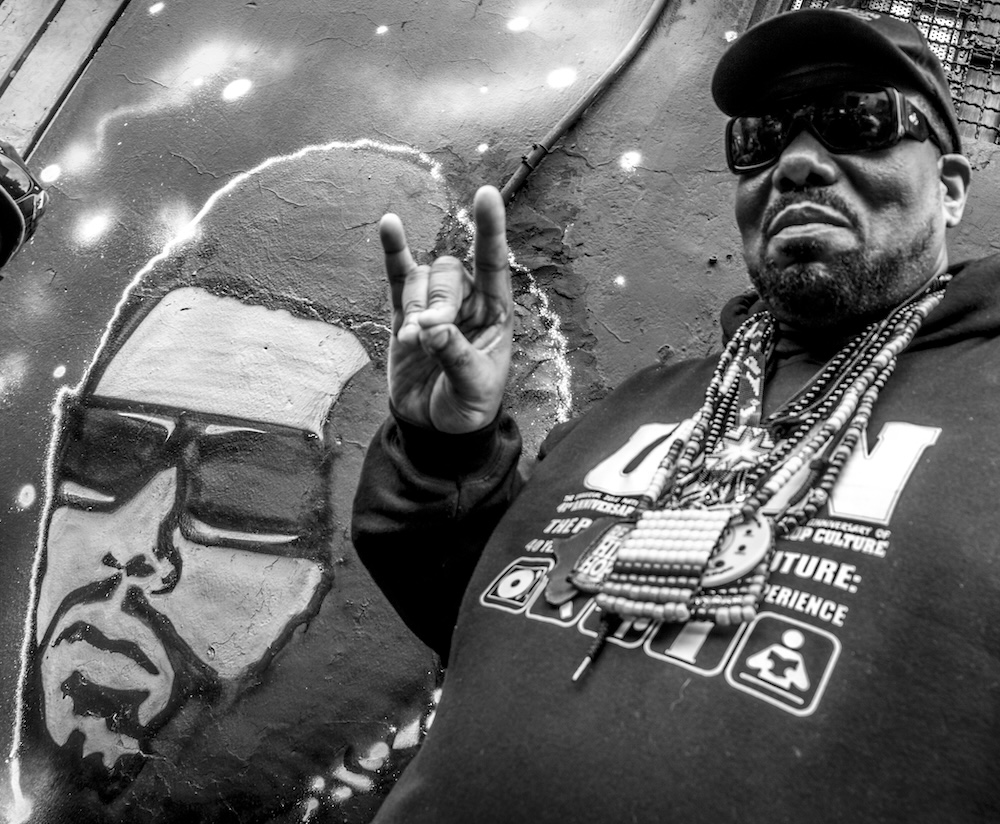
Photo: Afrika Bambaataa in Bogotá, via Wikimedia Commons (CC BY-SA 2.0).








5 thoughts on “Afrika Bambaataa (1957–2026)”