
World Supreme Hip Hop – The Freshco & Miz Story
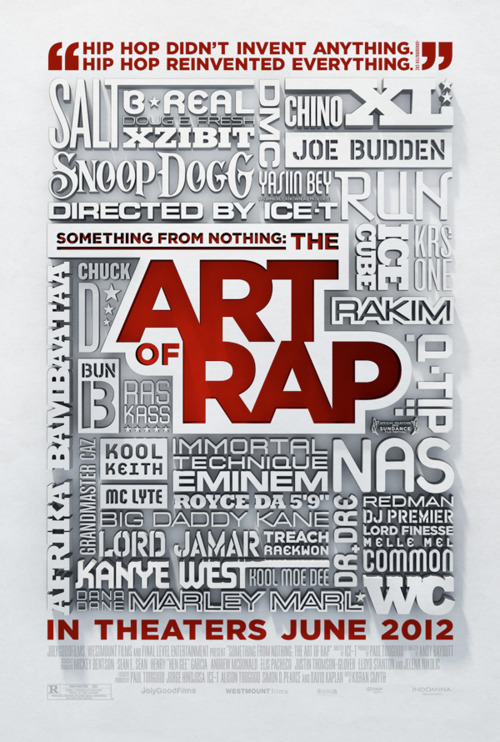
This is the story about two young (NON-gangster type) perfectionists from distant cites who once won the World Rap & DJ contests in the same year and then joined forces. Re-live their rise to Hip Hop fame and see how they impacted the culture before suddenly disappearing from the music scene to pursue careers in television. Images include: Ice T, Ice Cube, MC Lyte, Trech, Monie Love, Yo-Yo, D Nice, MC Serch, Ed Lover & Doctor Dre, Dres, and DJ Wiz of Kid N Play.
Two world champions. One perfect team. And an industry that didn’t know what to do with either of them.
,There is a particular kind of Hip Hop story that never gets told the way it deserves. Not the rags to riches arc. Not the pop crossover. Not the beef, the tragedy, the redemption. This is the other kind. The story of two people who were genuinely, undeniably the best at what they did, who found each other at exactly the right moment, built something real together, and then watched the machinery around them fail to keep up. The FreshCo and Miz story is that kind of story. And the documentary built around it, produced with the kind of care that only comes from people who were actually there, is a long overdue act of historical correction.
The film covers the rise of two young men from two distant cities, FreshCo from Brooklyn and Miz from Southwest Philadelphia, who each won world championship titles in the same year and then joined forces to form what the people around them consistently describe as a perfect team. The cameos alone tell you something about the weight this story carries. Ice T, Ice Cube, MC Lyte, De La Soul, Treach, Monie Love, Phife, Guru, Kool DJ Red Alert, DJ Enuff, and more. These are not people who show up for just anyone. When they show up here, it is because FreshCo and Miz meant something to them personally, and that meaning has not faded.

Two Cities, One Standard
To understand what FreshCo and Miz represented, you have to understand where they each came from and what those places demanded of them before they ever shared a stage.
Miz grew up in Southwest Philadelphia, in a neighborhood the documentary describes as sitting halfway between DJ Cash Money and DJ Jazzy Jeff. That is not a throwaway line. That is a geography lesson in excellence. The Philly DJ scene of the late 1980s was operating at a level that people who were there still struggle to fully articulate. DJs on every block. Literally two or three per block. The house party was not a place to dance, it was a place to stand at the DJ table and watch what happened next. The culture of that neighborhood produced something specific: DJs who were not interested in showmanship for its own sake, but in musical composition. In what sounds you could make and how far you could push the technique. Miz absorbed all of it, watching Jazzy Jeff, studying Cash Money, and then doing what the best students always do. He pushed past what he had learned and found something new.
The beatbox technique that Miz pioneered, what would later come to be understood as beat juggling, is described in the documentary as something that happened partly by accident, pulled from necessity in the heat of a competition. He was out of material in the finals. He had used everything he had just to get there. And then he reached for the only thing he had left and found something nobody had heard before. That is not luck. That is what happens when someone has spent years building a foundation deep enough to fall back on when the pressure is highest. “In big games you come up with big plays,” he says in the film, with the calm of someone who has had a long time to understand what that moment actually was.
FreshCo’s origin story runs in a different direction but arrives at the same destination. Brooklyn produced him, the Roxy shaped him, and a relentless perfectionist instinct defined him. The documentary paints a picture of a person who did not dabble. Whatever he entered, he mastered. Breakdancing. Graffiti. Karate. And then the microphone, which became the thing that made people genuinely afraid when they heard his name announced at a party. The descriptions of his MC abilities across the film are consistent to the point of being almost unnerving. Intricate flow. Mindbending lyrics. A rhyme scheme so specific to his own voice and delivery that nobody else could have executed it. An ability to shift styles within a single performance that left audiences and fellow artists trying to figure out if they had just seen something they would be talking about for decades. The answer was yes.
What the New Music Seminar Made Possible
The New Music Seminar was where it became official. The tournament drew MC and DJ competitors from across the country and around the world, and by the time FreshCo and Miz each stood in front of that audience and took their titles, the room was full of the people whose opinions mattered most in Hip Hop. Winning there did not just mean you were the best. It meant the best people in the world had witnessed it and could not argue with what they saw.
The documentary captures the significance of that moment without overstating it, letting the voices of people who were present do the work. There is a clarity in how they describe it. Once your name was attached to that championship, you were the man. The world was watching because the New Music Seminar reached Japan, Germany, and beyond. These were not local bragging rights. And when two champions from the same year decided to join forces, the logic felt almost mathematical. A world champion DJ and a world champion MC forming a group was not just a good idea. It was the obvious conclusion to a problem Hip Hop had been working on since the beginning: what does the perfect team actually look like?
FreshCo and Miz had their answer. “We were like hip-hop ninjas,” FreshCo says near the end of the film, with a smile that carries both pride and the particular peace of someone who has made his own accounting of what happened. That image is right. They moved with precision. They prepared obsessively. They arrived at every performance ready for any angle, any attack. The limousine circling the block before a show at the YMCA in West Philly until the crowd was thick enough, the murmur loud enough. That is not vanity. That is professionalism. That is two people who understood what they had and refused to let it be taken lightly.
Tommy Boy and the Gap Between Talent and Timing
This is where the story gets complicated. And honest. And, if you love Hip Hop and have spent any time paying attention to its history, deeply familiar.
Tommy Boy Records was not a bad label. The roster at the time included Queen Latifah, De La Soul, Digital Underground, and others who were doing some of the most interesting work in the genre. The problem was not the company of those artists. The problem was that Tommy Boy, like most labels of the era, had a limited capacity to understand what it actually had when it had something that did not fit neatly into a package it already knew how to sell. FreshCo and Miz were not a gangster rap group. They were not a pop crossover act. They were not easily photographed into a marketable image because their entire value proposition was skill, and skill requires an audience that is paying close enough attention to recognize it.
The documentary is candid about the options that existed. Conversations with Rush Management. Meetings with Puffy, who was not yet Diddy, in offices where the roster on the chalkboard was already crowded with artists demanding attention. Looking at Def Jam and calculating whether there was room to breathe. The decision to stay with Tommy Boy, made partly for practical reasons and partly because the momentum of the seminar victory made any deal feel like enough, is not treated in the film as a catastrophic mistake. It is treated as something more honest and more painful than that. A series of reasonable decisions made in real time by people who could not have known what the next few years would bring, compounded by a label that simply did not know how to capitalize on what pure skill looked like when it showed up without a costume.
“A pure MC and a pure DJ, I don’t think they really understood what to do.” That sentence, delivered quietly in the film, says everything. The industry of that era was moving toward a particular version of Hip Hop that rewarded a specific kind of image and a specific kind of sound. FreshCo and Miz were operating outside that current, not because they were behind it, but because they were too committed to craft to dilute it for the sake of marketability.
The Untold Story Problem
One of the things this documentary does that is genuinely valuable is locate FreshCo and Miz within the broader problem of Hip Hop’s historical memory. The genre has always had a mainstream and a deeper layer running beneath it. The mainstream remembers what sold. The deeper layer is where the artists who actually moved other artists live, where the emcees who made Biggie nervous and the DJs who pioneered techniques that the next generation would claim without knowing where they came from are stored. FreshCo and Miz belong to that layer, and the documentary is an act of retrieval.
“You don’t really hear about Brooklyn,” someone says early in the film. “You hear about Big Daddy Kane, he was hot, don’t get me wrong, but there was a whole lot going on in Brooklyn with MCs and DJs long before that.” That observation applies as much to the broader culture as it does to the borough. The stories that do not have a commercial hook, that cannot be reduced to a number one single or a platinum plaque, require someone to go looking for them deliberately. This film went looking. And what it found is a story that the people who were present have been carrying for thirty years, waiting for someone to ask the right questions.
What Lasts
FreshCo eventually moved into sound design for television, working on projects for Tyler Perry, The Matrix, King of the Hill, and others. Miz worked behind the scenes in television and toured with a Hip Hop stage play that sold out across the world. Neither of them disappeared into failure. They moved, as FreshCo puts it, with the same energy they always had. They had their time, they did what they came to do, and then they went and did something else just as well.
What the documentary captures, in the space between the championship footage and the present-day interviews, is the distance between what FreshCo and Miz deserved and what the industry was equipped to give them. That distance is not unusual in Hip Hop history. It is in fact one of the genre’s oldest and most persistent patterns. What is unusual is that anyone took the time to document it this carefully, with this many witnesses, and with this much obvious love for the people at the center of it.
“You can’t erase what they had done,” someone says near the end. “Because what they had done is part of history.” That is true. And now, because of this film, a few more people know it.



One thought on “World Supreme Hip Hop – The Freshco & Miz Story”