Common – Be
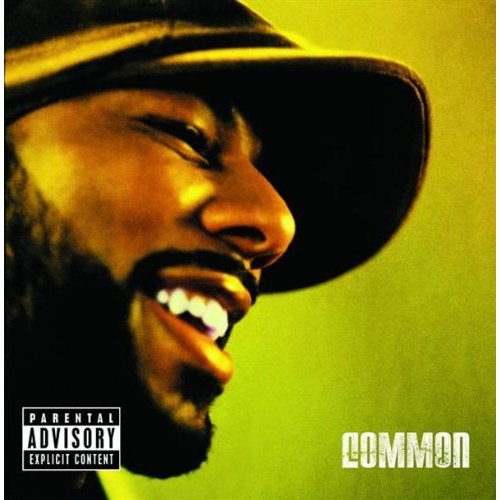
Artist: Common
Album: Be
Label: Good Music/Geffen
During the opening moments of the intro track to Common’s newest album, Be, a simple bass line eases into a ‘70s stringed operatic funk groove, letting you know that Kanye West’s production on this album will be consistent with the all-star material Kanye routinely offers his listeners. You then hear Common then stuttered excitement of this promise: “yeah…Yesss.” Such a sentiment, a release in a word, is evocative of the release one finds throughout the album: “Yes!” A much-hyped, much-anticipated album, Kanye helps Common deliver the goods to all of us fans who have been waiting for something like this from Common so damn long.
See, Com was sick of this whole thing not too far back. I forgive him for that. We all have our doubts every now and then. The hip-hop game was, at the release of Electric Circus in 2002, floundering and confused. Several years before, independent, underground hip-hop met at a crossroads with its commercial twin when the “underground” elite actually started selling lots of records. The quality releases of One Day It’ll all Make Sense and, even more so, Like Water for Chocolate, thrust Common into this limelight. But then shit got fucked up. Me, I blame the 2000 election and 9/11, but maybe that’s just me. Everything, and seemingly nearly everyone, just got so … apathetic. In the midst of a world crumbling into itself, a hip-hop nation looked at its naval and kept on doing the same damn thing. And the same thing sold. In Common’s life, however, at least one good thing going on: Common had fallen in love with Erykah. So why not make a love record? Why not attack the cynicism? Bit Electric Circus, like so much rap forays into singing, isolated the fans who missed the rapping. And the oddball, eclectic production on the album had more than its share of naysayers, those unwilling to accept Common’s attempt at branching out.
So Common took a vacation. Why not? Who the fuck needs all that flak he got for experimenting?

Thank God for Kanye West. Although Be is a Common album, the title easily could have been “Common and Kanye present Be.” Does one even need to critique the production of this album, about 80% of which is Kanye’s? Saying that Kanye did it – whatever “it” is – and that it’s great almost sounds redundant by now. I don’t care if lots of his stuff sounds the same: that’s just consistency. It’s somewhat cliché by now to say that Kanye bridged the gap between the blinger wannabes and the backpackers, but damnit, that’s true, and that’s one of the reasons he’s so darn important. When Kanye thrust himself out there, things got confused again – less cynical. Suddenly, Jay liked Talib Kweli, released a masterpiece, got overtly political, and showed a maturity rarely exhibited in his previous releases. And he big-upped Common. It was no accident that Common was on Kanye’s album, and it was no accident that his first return to mainstream radio play was as a guest on the political monster jam remix of “Why,” alongside Jada and Nas. There was a new presidential election coming up; rappers started to act like activists again, and conscious people started waking up with newborn hope, Lonnie Lynn included.
The “Be” of this album title is a command, both to accept oneself for who you are, and to work to make that self the best it can be. Part of who you are is where you’re from, and there’s a lot on this album to emphasize that one should never run from his/her beginnings, to accept it, embrace it, but also be unafraid to criticize it. Repeatedly on this album, Common chastises those from his community – however defined, his friends to Chicago to hip-hop in general – who rejected his experimental dabblings. This album tells them that he’s the same Common he’s always been; he’s just growing and evolving.
Prominent among those he’s addressing here are the people who make the street – the everyday street, with its everyday goings-on – their regular hangout. This group is the subject not only of the lead single “The Corner,” but is also spoken to through numerous verses throughout the album, as Common tries to convince them that No, he wasn’t trying to abandon them by branching out. This newfound drive to address these people – his people – could almost be read as an acknowledgment that he didn’t try hard enough to include them on his last effort. “The Corner” recognizes the street corner as not only metaphor, but a real opportunity for upliftment – as a part of the foundation of hip-hop. The hip-hop pioneers The Last Poets make perfect guests on this song, their inclusion an acknowledgment as to where hip-hop – as part of Common – comes from.
The next songs focus more intently on the concept of love – love for a woman, love for God, and love for community. While the several songs following “The Corner” are quite good, they don’t push the envelope in the way others do on this album. Or maybe I just prefer it when Common doesn’t concentrate so heavily on exploring the concept of love. He’s done it before, and done it well. “GO!” is a testament to how true relationships must have a sexual foundation, which, quite frankly, is a little boring. A better offering and one more worthy of Common’s later, better work, is “Faithful.” With lyrics following the declaration “This is for the people God moves,” Common uses the metaphor of love for a woman to love for God. He used to do this when talking about hip-hop, remember? Common tells us that just as we should try to be faithful to a woman, we should try to be faithful to God. And treat a woman as you would God. The John Legend and the gospel chorus in the background serve to bolster the interweaving of religion; no one but Kanye could pull this off so well. Two songs later, on “Love Is…” Common tells us of the love he sees in his neighborhood (again, the return to the concept of “The Corner”), and in the larger community. But he’s not only recognizing the love, he’s trying to enforce it: “It’s all love where we come from, in the hood love we was told to run from, that same hood where the guns sung, we holla love, hoping it will come one.”
Amidst all this lubby-dubby, “Testify,” the fifth track on the album, is a true-to-form story-rap. An old form, its inclusion here shows how much Common not only respects his hip-hop roots, but enjoys them. About once an album Common has one true story-rap, and really, once an album is enough. The hook and production on the track is incredible, the story somewhat mild; this is definitely a good song, but the weird thing is that the femme fatale storyline here completely contrasts the emphasis on love on the previous two tracks. No one but Common could have put this song right after the last two. It doesn’t take him long to return back to love theme in “Love Is,” making “Testify” seem more an intermission than anything else.
The second half of the album focuses more on Common’s own, personal, recognition. It’s not braggadocio: this isn’t “I love me because I’m awesome,” but “I love me, because humans should love themselves, and this is what I’ve discovered about me.” Part of what he’s discovered is that he likes experimenting, and on “Chi-City” Common refutes those who claimed he was falling off: “I took it outer space / and niggas thought they lost me / I’m back like a chiroprac with b-boy survival rap / It ain’t ‘94 Joe we can’t go back / The game need a makeover / My man retired / I’ma take over / tell these half-time niggas break’s over.” Common is here, see, to fill in Jay’s shoes in elevating all that’s around him, and when he tells us “I wonder if these wack niggas realize they wack / and they the reason my peoples say they tired of rap,” you know he’s on a mission.
“The Food,” the next track, is simply one of Common’s all-time best, and one of the best songs of year. Kanye’s ill hook and incredible piano loop sets up Common’s strong lyrics filled with Chicago street imagery and reminiscences that being successful in hip-hop isn’t about bling materialism, it’s about making a living, or at least, that’s nearly always how it starts, and is a foundation to build from. This song makes you feel…good. About whatever hustle, whatever hard shit, whatever bad job you took that you hated, that you did just to not worry about money: “So I had to did / what I had to did / cuz I had to get / d-ough, d-ough.” Just because everyone has to eat. This song is transcendent because of its humility: both Common and Kanye still remember why, and how, they’ve worked so hard to get here. The two are incredibly successful, and in that respect, the concept of working to get food – something they both clearly needn’t think about anymore – almost feels like an out-of-body experience.
Aside from touching on a host of other topics, the next two songs, “Real People” and “They Say,” both have their strongest moments reflecting on Common’s struggles with his acceptance both as an artist and on the street. On “Real People,” Common asks “Can a dude break free and still get honored at home? / I was told by a chief it’s the game’s nature / when you glowin’ some’ll love and some will hate ya” On “They Say” Com again addresses those who thought he fell off: “They say a nigga lost his mind / but in the scheme of things I never lost a rhyme … They say you went wild / yeah that’s what they say, my niggas couldn’t tell it was me like Jamie in Ray.” The message here is: don’t bend yourself to satisfy others, be as wacky as you wanna be: “They say the crochet pants and the sweater was wack / Seen ‘The Corner,’ now they say that nigga is back.” “It’s Your World,” the final song on the album, ends with a cautionary tale about a woman who grew up in a broken, abusive home, and tragically never made the decision to work to seek a brighter future. Common, simply, asks us to make better choices than she did: “Life is fast, so choose to be quicker.”
Following that is the now-requisite spoken-word poem by Common’s pops. Following a montage of children declaring what they want to be when they grow up, the concept codas back nicely from the intro to the album, when Common claims he’s really in this now to guide the children. Referring to his daughter, he claims “If I’ma do it, I gotta change the world through her.” To “be” is not only coexisting with the world, but also striving to make it better: “This present is a gift, and I just wanna be.” The spoken word poem reiterates the same, valuable lesson stated throughout the album: take an active part in your existing, coexist with the world but also try to make it better. Like the last track begs over and over again, be yourself, but damnit, be good. I’m glad Common thinks enough of us to be himself around us, and to show us how good he can be.

![Common – “I Want You” [Sneek Peak]](https://www.onetwoonetwo.com/wp-content/uploads/2012/09/07261.jpg "Common - I Want You [Sneek Peak]")