
A Voice Behind the Records
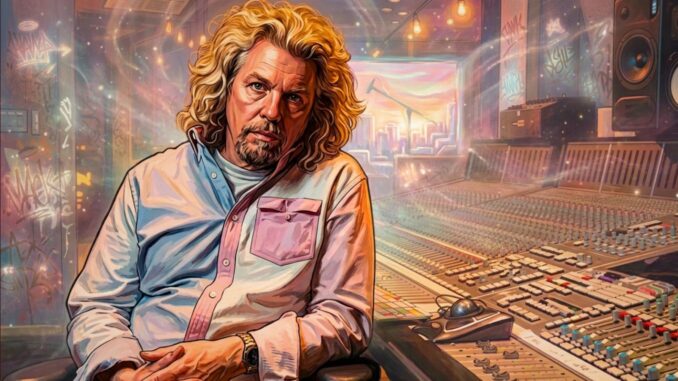
Bob Power (April 5, 1952 – March 1, 2026) spent fifty years making other people’s music sound better. He worked as a recording engineer and producer on some of the most important albums in hip-hop history. He mixed records for A Tribe Called Quest, De La Soul, The Roots, Erykah Badu, and D’Angelo. He helped give an entire generation of Black music a specific, warm, bass-heavy sound. When he died on March 1, 2026, at the age of 73, the music world stopped to pay attention. Questlove posted on social media that Power was “like training wheels” for The Roots, the man who showed them how to take their live band sound and get it onto a record in a way that felt professional and honest. DJ Premier called him one of the greatest engineers who ever lived. Erykah Badu wrote that she wished him a safe journey and thanked him for every lesson. These are not small names dropping small compliments. These are some of the most respected artists in the history of the genre, and they all pointed to the same man as a foundational figure in their careers.
From Chicago to New York, One Gig at a Time
Power was born on April 5, 1952, in Chicago, Illinois. His family moved around early in his life, settling eventually in St. Louis. He picked up the guitar because of his sister, who had gotten one to learn a Bob Dylan song. Power wanted to play louder than she did, so he started taking lessons. That competitive spark pushed him forward. He studied music theory at Webster College in St. Louis and played in an R&B band called the New Direction while earning his degree. He went further west after graduation, landing in San Francisco to pursue a master’s degree at Lone Mountain College, where he dove into jazz. He stayed in California for seven years. During that time he wrote music for a television show called Over Easy, which won an Emmy award, and he wrote commercial jingles for companies like Coca-Cola and Mercedes-Benz. He was building skills across multiple forms of music, learning how to write, arrange, and think about sound from many different angles at once. By the time he moved to New York City in 1982, he was ready, even if the jobs waiting for him were not glamorous. He played gigs at a psychiatric hospital. He played retirement parties. He played a mafia wedding in Bensonhurst, Brooklyn, and walked away with seventy-five dollars and a story he told for years.
The Session That Changed Everything
The break came in 1984 at Calliope Studios in Manhattan. The studio owner needed someone to fill in while staff were on vacation, and Power took the session. The group recording that day was Stetsasonic, a rap crew known for using live instruments alongside turntables. Power did not know rap music well at the time, and he said later that the ignorance helped him. He had no fixed idea of how it was supposed to sound. He asked the group what they wanted and used his jazz training to hear what the music needed. He focused on the bass and the drums, made them sit together with weight and clarity, and Stetsasonic liked the results enough to bring him back for their full album, On Fire, released in 1986. That record connected him to the Native Tongues collective, a loose group of artists centered in New York who were building a new direction in hip-hop. A Tribe Called Quest and De La Soul were part of that world, and Power became their engineer.
The Low End Theory and the Native Tongues Era
The most celebrated work of his career came in 1991, when A Tribe Called Quest released their second album, The Low End Theory. Power worked on the record through 1990 and into 1991 alongside Q-Tip and Ali Shaheed Muhammad. The album used jazz samples in ways nobody had tried before. Instead of repeating one loop throughout a song, Q-Tip and Ali Shaheed built tracks out of multiple pieces, often choosing samples that a classically trained musician would not have found by searching through obvious records. Power’s job was to make all of those pieces sound like they belonged together. He focused on the acoustic bass, a live instrument that played through much of the album, and worked to make it sit naturally next to programmed drums and sampled loops. The result was a record that sounded warm and deep, with a low end that felt physical when played loud. Power compared the album to a celebrated Beatles record in its importance to the genre. Critics and fans agreed. The Low End Theory has appeared on virtually every serious list of the greatest hip-hop albums ever made. Also in 1991, Power worked on De La Soul Is Dead, the second album from De La Soul, another Native Tongues record that pushed the genre in a more raw and experimental direction. He mixed tracks for the Jungle Brothers as well and became one of the most in-demand engineers in New York hip-hop.
Decades of Work Across Hip-Hop’s Biggest Names
His reach extended beyond the Native Tongues circle. He worked on Down With the King, Run-DMC’s 1993 comeback album, which brought the group back into the conversation after years away from the charts. He mixed tracks for Black Sheep and worked with Rahzel. He spent significant time with The Roots across several albums, including Do You Want More?!!!??! and Things Fall Apart, helping Questlove and his bandmates translate the energy of a live funk and jazz band into records that worked on hip-hop radio without losing what made them special. He worked with Common on the album Be in 2005. He mixed tracks from J Dilla’s posthumous album The Shining. He worked with Blackalicious and Tre Hardson. Decades into his career, he was still the person artists called when they needed the record to sound right. He worked with Brockhampton and contributed to Forever, the posthumous album from Phife Dawg of A Tribe Called Quest, released in 2022. His final sessions were for China Moses and Meshell Ndegeocello, with whom he had worked for decades.
Neo-Soul, Grammy Nominations, and the Charts
In the mid-1990s, Power moved into neo-soul, a style that drew on classic R&B, jazz, and soul and set it against production rooted in hip-hop. He produced and mixed Erykah Badu’s debut album Baduizm, released in 1997. The lead single, On & On, went to number one on the R&B charts and became the first chart-topping hit of his career. Badu said later that her album had more bass than any vocal record she had ever heard, and she credited Power with shaping that quality. He also worked on D’Angelo’s Brown Sugar, mixing tracks including Alright and Me and Those Dreamin’ Eyes of Mine. His work on Meshell Ndegeocello’s Peace Beyond Passion earned him a Grammy nomination for best engineered album in 1997. He worked with India.Arie on Acoustic Soul, which received a Grammy nomination for Album of the Year. He mixed a version of I Try for Macy Gray and worked with Chaka Khan and David Byrne at various points in his career. He touched more than forty charting songs over the course of his life, and more than twenty of his records went gold or platinum.
Teaching the Next Generation at NYU
In 2006, Power took a position at New York University’s Clive Davis Institute of Recorded Music, part of the Tisch School of the Arts. He taught there for nearly twenty years before retiring in 2025 with the title of professor emeritus. Nicholas Sansano, the director of the institute, said after Power’s death that he had helped shape the values of the school from its earliest days and called him a musical legend whose influence extended across an entire era of recorded sound. Sansano also remembered him as a generous friend. One of Power’s students was singer-songwriter Maggie Rogers, who said he made her feel seen as a creative person and encouraged her to keep searching for new ideas rather than settling on what already worked. Power approached teaching the same way he approached the studio. He shared everything he knew. He was direct about what he heard and honest about what he thought a record needed. Young engineers who came up in his classes left with technical skills and also with a sense of what it meant to care about the work.
What He Left Behind
Young Guru, one of the most respected engineers of the generation that came after Power, said Power gave his entire peer group a specific sound, a way of hearing low frequencies and drum hits and vocal presence that became a standard for hip-hop records in the 1990s and beyond. That influence is not abstract. It lives in the records. Put on The Low End Theory or Baduizm or Things Fall Apart and you can hear what Power valued. The bass sits forward. The drums hit with weight. The vocals sit in the mix with clarity and presence. Nothing feels thin or distant. Power believed the mix was its own form of composition, a set of decisions about balance and depth and space. He brought that belief to every session he took. He was 73 years old when he died, and he had been working in music for fifty years. The reason people responded the way they did when his death was announced is simple. The records are still playing. They still sound right. That is his work.


Leave a Reply