
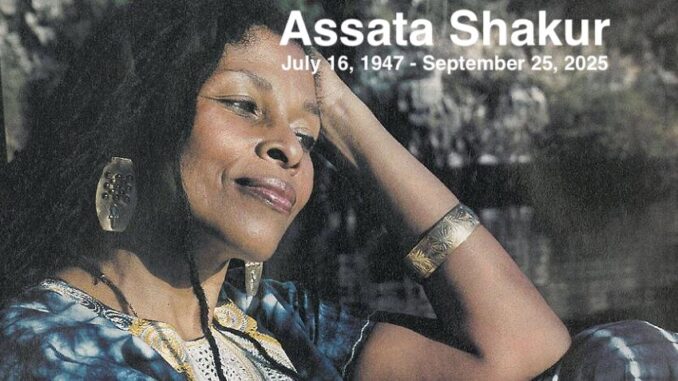
Assata Shakur passed away in Havana, Cuba on September 25, 2025 at the age of 78. For decades, she Assata has been a revolutionary figure from the 1970s but remained a presence in Hip Hop. Her name appeared in rhymes, in liner notes, in live shows, and in speeches. If you’ve spent enough time with rap records from the late 80s through the 2000s, you’ve heard her name. You might not have even realized the significance at the time, but Assata’s story has been woven into Hip Hop’s DNA.
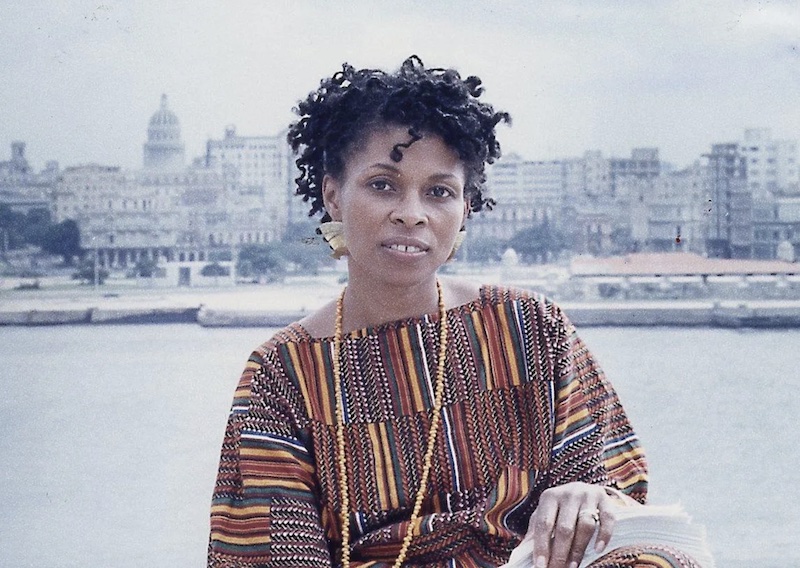
July 16, 1947 – September 25, 2025
Who Was Assata Shakur?
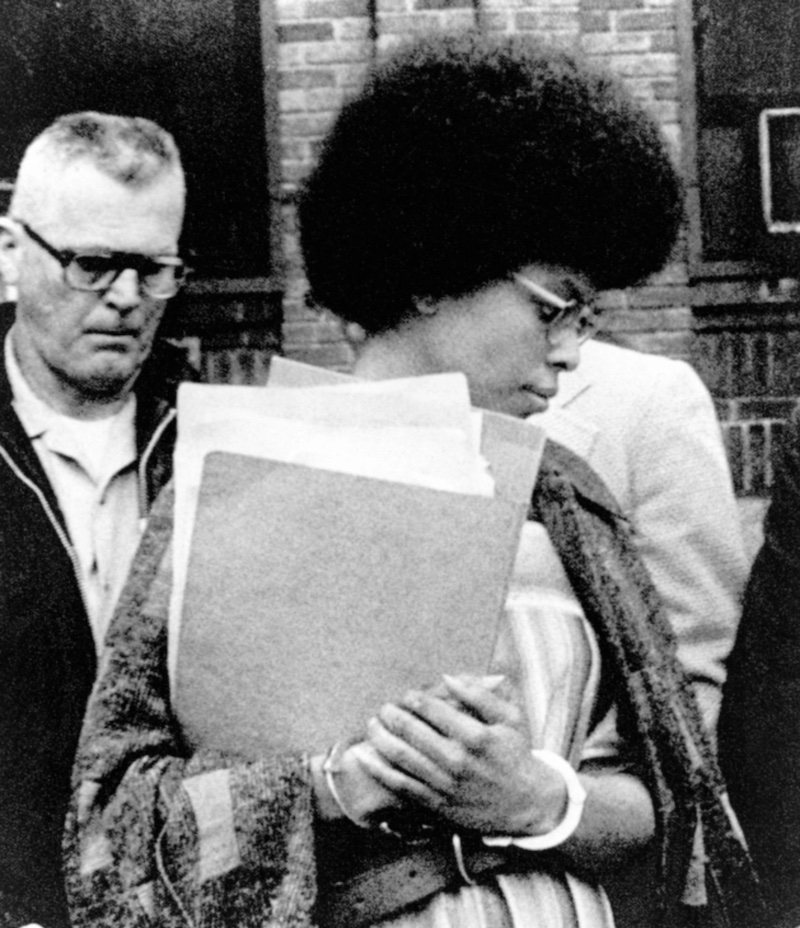
Assata Shakur was born Joanne Chesimard in Queens in 1947. She joined the Black Panther Party and later the Black Liberation Army. In 1973, she was involved in a shootout on the New Jersey Turnpike that left a state trooper dead. She was convicted of murder in 1977 and sentenced to life, though she always maintained she was framed. In 1979, with the help of BLA comrades, she escaped from prison and eventually surfaced in Cuba, where she was granted asylum.
The U.S. government has called her a terrorist. Activists have called her a political prisoner. That split in how she’s remembered is part of what makes her so powerful in Hip Hop. Her autobiography, published in 1987, spread her voice to a new generation. Tupac Shakur, her godson and step-nephew, spoke about her influence. For rappers, especially those who saw themselves as more than entertainers, her story was an irresistible symbol of resistance.
Assata Shakur in Lyrics
The most powerful proof of influence is always in the music itself. When a rapper says your name on wax, it gets locked into memory. Below is a list of songs where Assata Shakur is mentioned directly. These aren’t symbolic nods, they’re literal shout-outs or tributes.
Songs Explicitly Mentioning Assata Shakur
Public Enemy, 1988. Chuck D and Flavor Flav put out It Takes a Nation of Millions to Hold Us Back and it immediately became a manifesto. On Rebel Without a Pause, Chuck bellows, “supporter of Chesimard,” referencing Assata by her government name. It’s quick, almost easy to miss, but at a time when mainstream America knew her as a fugitive, it was a bold choice.
Tupac, 1991. On his debut album, 2Pacalypse Now, Pac drops “Assata Shakur, America’s nightmare” during the outro of Words of Wisdom. The song is already a lecture on oppression, and the inclusion of her name connects him directly to a lineage of struggle. Pac always said his politics were influenced by his family, and Assata was part of that web.
Paris, 1992. Paris didn’t just reference her, he wrote Assata’s Song on his album Sleeping with the Enemy. This was a record that got him dropped from his label for being too radical. His track paints Assata as a hero and a symbol of Black resilience.
Common, 2000. Common actually traveled to Havana to meet Assata, then wrote A Song for Assata. It’s not just a shout-out, it’s a whole storytelling piece. He paints her humanity, her situation, and ends the song with her voice sampled. When Common performed at the White House in 2011, conservatives attacked him for this very song.
The Roots, 1996. On Illadelph Halflife, The Adventures in Wonderland drops her name. The Roots, often seen as intellectuals of Hip Hop, folded her into their dense lyrical universe.
Saul Williams, 2004. In Black Stacey, Saul name-checks Assata along with a list of Black leaders. It’s part of his method of tying poetry to revolution, letting the listener know these names still matter.
Digital Underground, 1991. Heartbeat Props is often remembered for its funk and social commentary. Shock G and the crew referenced Assata alongside other activists. It’s a reminder that even groups best known for humor and party tracks carried political awareness.
Each of these records doesn’t just prove that rappers knew her story. They show how her name got carried into every corner of the culture, from gangsta rap’s most iconic figure to alternative poets like Saul Williams.
This is not an exhaustive list by any means and surely some of your favorites might have been missed. Drop the song reference in the comments.
“You askin’ me about freedom? I’ll be honest with you, I know a whole lot more about what freedom isn’t than about what it is, because I’ve never been free.”
Assata Shakur, “A Song for Assata” by Common
Other References in Hip Hop Beyond the Lyrics
Not every artist put Assata’s name in a rhyme. But her presence still showed up in other ways. Liner notes, interviews, live shows, and activist speeches kept her alive in the culture.
Not every shout-out came in the form of a verse, and that’s important to recognize. Assata’s name carried into the culture in quieter, but still powerful ways. Nas slipped her name into the liner notes of his 2008 Untitled album, placing her alongside a roll call of Black leaders and revolutionaries. Dead Prez went even further, making her presence felt not only on records but in live shows, calling her a freedom fighter and dedicating performances in her honor. Immortal Technique made her part of his arsenal of references in tracks like Obnoxious, and he doubled down in interviews where he spoke of her as proof of America’s contradictions. Talib Kweli talked about Assata on stage and in conversation, reminding younger audiences that her story wasn’t ancient history. Groups like Digable Planets and X-Clan carried her as part of their Afrocentric aesthetic, making sure her name lived inside the world they were building. And in the 2000s, Rebel Diaz shouted her out at rallies and in songs, weaving her directly into immigrant rights and anti-police violence struggles. Even Jay Electronica, a figure known for mixing mysticism and radical politics, dropped her name in freestyles, showing how her legend stretched across generations. In all these moments, Assata was a symbol, a way for artists to stake out where they stood.
What stands out here is the diversity. Nas quietly prints her name in a CD booklet. Dead Prez screams her name in shows and connects her story to their Pan-African vision. Immortal Technique, always blunt, throws her in as a real-world example of resistance. Talib Kweli has used his platform to remind people about Assata during speeches and rallies. Rebel Diaz, an activist rap group, ties her legacy to immigrant rights and anti-police violence.
The point is this: Assata’s name survived in the music, was spoken at protests, it was printed in booklets, and it was shouted from stages.
“Hip Hop can be a very effective way to reach young people and teach them about current political and social issues.”
– Assata Shakur
Assata Speaks on Hip Hop
In a 1998 interview with The Source, Assata spoke about the rise of Hip Hop while living in Cuba. She explained that she made a conscious effort to understand the music and came to respect it as an art form. “I remember listening to groups like Public Enemy… and hearing Chuck D actually saying my name, paying me respect!” Her words show how strongly Hip Hop and her legacy have been connected.
Themes in the References
There are a few recurring themes that explain why Assata became such a staple in Hip Hop’s language.
First, resistance. Saying her name is a shorthand for saying you reject the system. She represents someone who was hunted, imprisoned, escaped, and lived in exile, yet still refused to break.
Second, injustice. Whether or not one believes in her guilt, the idea of her being railroaded and made into a symbol by the government resonated with communities who already felt criminalized.
Third, martyrdom. Assata was alive, but in many ways she lived as if she were gone from the U.S. forever. That gave her a mythic quality.
Fourth, gender. In a culture where most revolutionary icons are men, Assata’s presence gave artists a way to honor a woman who stood alongside them.
The Controversy
None of this is without pushback. When Common performed A Song for Assata at the White House, Fox News attacked him as praising a “cop killer.” The FBI has long kept her on the Most Wanted list and raised the bounty on her head to $2 million in 2013. For some in mainstream America, she’s untouchable.
But that tension is exactly why hip hop embraced her. Artists used her name to draw a line: are you with the state’s narrative or with the community’s? And sometimes, the artists themselves got caught in the middle.
Legacy and Relevance
Despite her death, Assata’s name is already locked into history through these songs, and it’s likely more will come. Younger rappers may sample those older tributes or reference her again in the context of movements like Black Lives Matter.
Her story also forces us to look at Hip Hop itself. Why does a culture built on beats and rhymes keep going back to figures like Assata? The answer is that Hip Hop was never just entertainment. It was built as a tool to talk about power, about oppression, about survival.
When you listen to Pac say her name, when you hear Common devote an entire song to her, you’re hearing that deeper current. Hip Hop took someone who the U.S. government tried to erase and made her unforgettable.
Assata Shakur’s name has been spoken on stages, pressed into vinyl, printed in CD booklets, shouted through megaphones, and whispered at rallies. From Chuck D in 1988 to Saul Williams in 2004, from Dead Prez in packed clubs to Nas sliding her into his liner notes, her influence is clear.
Now that she’s gone, it’s certain her name will continue to appear. Because in Hip Hop, to speak Assata Shakur’s name has always been an act of defiance, a refusal to let the system dictate who gets remembered and who gets erased. And that’s exactly what the culture was built to do.
Further Reading on Assata Shakur
Assata’s name in Hip Hop is only one part of her story. To really understand the impact she’s had, it helps to read the words and histories that shaped her life and the movements she was part of. These books are full of stories, testimony, and context that show why artists still bring her up decades later.
Assata: An Autobiography by Assata Shakur, with a foreword by Angela Davis (2001)
This is the book that keeps coming up whenever her name is mentioned in Hip Hop. It’s her own story, told in her words, about growing up in the U.S., joining the Black Liberation Army, surviving prison, and eventually living in exile in Cuba. No secondhand account can replace the direct honesty of this autobiography.
Still Black, Still Strong by Dhoruba Bin Wahad, Assata Shakur, and Mumia Abu-Jamal (1993)
Written by three people who lived through the battles of the 1970s and 80s, this book is both testimony and analysis. It deals with state repression, COINTELPRO, and the survival of Black revolutionaries. Assata’s voice is right there alongside two other figures who spent years fighting and enduring prison.
Assata Shakur: A 20th Century Escaped Slave by Barbara Casey (2017)
This book is a more recent attempt to capture Assata’s life and the meaning of her escape. While not written by her, it frames her story in the larger history of slavery, escape, and resistance in America. It’s a perspective that helps connect her flight from prison with centuries of struggle for Black freedom.
Assata Taught Me: State Violence, Racial Capitalism, and the Movement for Black Lives by Donna Murch (2022)
This is a collection of essays by Panther scholar Donna Murch that argues Assata Shakur isn’t just a figure of the past — she’s a living influence in today’s movements. The book examines how state violence, mass incarceration, and racial capitalism have shaped Black communities, and it traces how the Movement for Black Lives has drawn on Assata’s legacy as a militant, exiled symbol.





Leave a Reply